





-
June 5, 2009 :: RSS :: Print :: Email
 IRIN News: Facing unemployment, insecurity and lack of socio-economic opportunities at home, many Afghans, mostly young males, have increasingly resorted to costly and perilous illegal migration to European and other industrialized countries. Over 18,000 Afghan asylum-seekers were registered in 44 industrialized states in 2008 - a significant increase on previous years, according to the UN Refugee Agency (UNHCR). Full news...
-
May 28, 2009 :: RSS :: Print :: Email
 The Canadian Press: An international aid expert says only pennies from each dollar being sent to Afghanistan are actually reaching the people who need help. Marco Vicenzino says he is appalled by the inefficiency of humanitarian aid efforts. Vicenzino, who is a strategic adviser for the Afghanistan World Foundation, says about 80 cents of every dollar goes back to donor countries - largely through the contractors doing the work. Full news...
-
May 25, 2009 :: RSS :: Print :: Email
 The Trentonian: If so, maybe it’s time to look at the other Afghan surge: its population growth. It’s been seven years now since George W. Bush committed American troops to Afghanistan. Since then, Afghanistan’s population has jumped by 22 percent. Under current projections, its population will be twice as large in 2026 as it was in 2001. That’s because the average Afghan woman has almost seven children, one of the highest fertility rates in the world. Full news...
-
May 23, 2009 :: RSS :: Print :: Email
 The Times: Millions of pounds in taxpayers’ money have been wasted on failed reconstruction projects in Afghanistan, according to an internal assessment by the Department for International Development. An evaluation by independent consultants criticised the department’s approach to planning, risk management and staffing, and said poor co-ordination with the rest of Whitehall meant that the department was slow to shift strategy as the military effort moved to counter-insurgency. Full news...
-
April 30, 2009 :: RSS :: Print :: Email
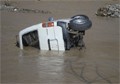 IRIN: Flash floods, landslides and earthquakes in different parts of Afghanistan in the last 10 days or so have damaged thousands of houses, killed hundreds of livestock and made thousands homeless, the UN Office for the Coordination of Humanitarian Affairs (OCHA) has said. “In Balkh Province [northern Afghanistan] about 1,500 families need emergency assistance,” said Sheilagh Henry, an OCHA field coordinator. Full news...
-
April 24, 2009 :: RSS :: Print :: Email
 Reuters: Mohammed Ali has no idea that the Taliban who once drove him from his home are staging a comeback in parts of Afghanistan. As a hired farmer, he is too busy worrying how to feed a family of seven on $100 a year. At the moment his children live off just bread and tea, but that is better than the harsh winter months when there is sometimes nothing. Many Afghans face a more urgent daily battle against poverty and hunger. Full news...
-
April 23, 2009 :: RSS :: Print :: Email
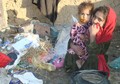 IRIN: Open defecation, lack of toilets and poor sanitation in makeshift internally displaced persons (IDP) camps throughout Afghanistan are a health threat, particularly to children, health workers and aid agencies say. According to the Afghan government, at least 230,000 people are living in formal IDP camps and informal settlements where few sanitary, water and toilet facilities are available. About 500 families (2,500 individuals) displaced from southern regions have set up shacks, tents and mud huts in Qambar on the western outskirts of Kabul. Full news...
-
April 19, 2009 :: RSS :: Print :: Email
 The National: Even as the international community renews its pledge to help develop Afghanistan’s infrastructure and public services, health workers throughout the nation’s capital paint a picture of a daily struggle against the odds in conditions that have barely improved since 2001. The lack of funding is so severe that operations are being carried out with old versions of the wrong instruments and patients must often supply themselves with medicines. In some cases, easily preventable deaths have apparently resulted. Full news...
-
April 16, 2009 :: RSS :: Print :: Email
 NPR: A growing number of Afghans — including children — are escaping the pain of war and poverty by using opium or heroin, for as little as a dollar a day. A United Nations survey begun this month is widely expected to show that at least 1 in 12 people in Afghanistan abuses drugs — double the number in the last survey four years ago. Experts say that the alarming trend is not being addressed by the Afghan government and its international partners, even though most officials acknowledge that the drug scourge threatens lasting stability in Afghanistan. Full news...
-
April 6, 2009 :: RSS :: Print :: Email
 Common Dreams: The proposed new Afghan law requiring (among other things), women to have sex with their husbands on demand and not leave home unescorted, has shocked the West. But for women in Afghanistan whose rights have always been bargaining chips to be given or taken away for political gain, it comes as no surprise. Despite the rhetoric from the Bush Administration in 2001 that “to fight against terrorism is also a fight for the rights and dignity of women (Laura Bush),” Bush’s own military strategy set the stage for the new Taliban-like law today. In hiring the fundamentalist warlords of the Northern Alliance to defeat the Taliban, the US knowingly sacrificed women’s rights for political gain. Full news...
-
March 31, 2009 :: RSS :: Print :: Email
 IRIN: Despite a July 2008 joint emergency appeal for US$404 million to help the most vulnerable 550,000 pregnant and lactating women and under-five children in Afghanistan, nutritious food aid - specially fortified food -is yet to reach those in need. Some 24 percent of lactating women are malnourished, over 19 percent of pregnant women have a poor nutritional status (low on minerals, vitamins, food insecure and weak) and about 54 percent of under-five children are stunted, according to a joint survey by UN agencies and the government. Full news...
-
March 17, 2009 :: RSS :: Print :: Email
 IRIN: Millions of trees have been lost in Nangarhar and the neighbouring provinces of Kunar and Nooristan and the ecosystem has been severely damaged because of deforestation, in part induced by drought, officials say. "In the past, over 134,000 hectares of land in the 11 districts of Nangarhar Province were forest, but now tree cover is down to less than 15,000 hectares," Nazir said. Large tracts of forest have also been lost to what were initially small fires. These often get out of control as Nangarhar only has two fire engines and very limited fire-fighting resources. Full news...
-
March 16, 2009 :: RSS :: Print :: Email
 Reuters: Afghanistan sits on one of the largest mineral deposits in the region, the country's mines minister said, urging foreign firms to invest in oil, gas and iron ore sectors. A U.S. Geological Survey (USGS) had shown that the war-torn nation may hold far higher amounts of minerals than previously thought, Mohammad Ibrahim Adel said. Full news...
-
March 15, 2009 :: RSS :: Print :: Email
 IRIN: Life for Jamaluddin’s family was much better when they lived as refugees in Pakistan in the 1990s; things have got worse since they returned to Afghanistan in 2008. Like millions of other Afghans, war and fear of death forced Jamaluddin to flee to Pakistan. Insecurity, land disputes and lack of jobs have stopped tens of thousands of returnees from moving to their original areas and rebuilding their houses. Some households, including Jamaluddin’s, have set up tents and mud huts in different parts of the eastern Afghan province of Nangarhar. Full news...
-
March 12, 2009 :: RSS :: Print :: Email
 PAN: Expressing its deep concern, Afghanistan Independent Human Rights Commission (AIHRC) has said that 80 percent of children in western Ghor province have been forced into labor due to poverty. The human rights official described the child labor a stigma in the society and stressed the need for improving the situation and provision of education opportunities to the children. Full news...
-
March 12, 2009 :: RSS :: Print :: Email
 IRIN: Wheat flour, rice and cooking oil prices have dropped by over 15 percent in the past three months but adequate food is still unaffordable for millions of Afghans living on less than US$1 a day, according to officials. The average price of a 50kg bag of wheat flour was 1,100 Afghanis (about US$21) on 10 March in Kabul, down from $36 in December 2008. A 24.5kg sack of rice has gone down to $25 from $37, and the cost of a 16kg canister of ghee is now $20 instead of $31. Full news...
-
March 10, 2009 :: RSS :: Print :: Email
 Xinhua: Around 10 million out of the whole population of the war-torn Afghanistan are jobless, a local newspaper reported Tuesday. "About 10 million out of 25 million populations of Afghanistan are without job," the newspaper Arman-e-Millie quoted Mohammad Zahir Kargar, the president of Workers Union of Afghanistan, as saying. Based on the remarks of Kargar, the daily said that high rate of unemployment and joblessness is the main reason for taking people towards committing criminal activities, armed robberies, suicide attacks and resorting to drug smuggling and addictions. Full news...
-
March 9, 2009 :: RSS :: Print :: Email
 IRIN: Less than 30 percent of the 166,000 tonnes of wheat the Afghan government promised to distribute to tens of thousands of people during the winter months (October-March) has been delivered so far, according to the Afghanistan National Disasters Management Authority (ANDMA). Severe drought which reduced domestic agricultural production by 35 percent in 2008, sudden hikes in food prices, and problems resulting from armed conflict have pushed about eight million people into high risk food insecurity, aid organisations say. Full news...
-
March 8, 2009 :: RSS :: Print :: Email
 The Christian Post: Drought-stricken and internally displaced, many Afghans can’t even be assured of one good meal a day for themselves and their family, reported a Church World Service staff on Friday. "Life continues to be difficult for all Afghans, but the tens of thousands of displaced Afghans and returnees from Pakistan and Iran are particularly at risk," says CWS Asia and Pacific Region Coordinator Marvin Parvez, who has also directed the CWS Pakistan/Afghanistan program. Full news...
-
March 5, 2009 :: RSS :: Print :: Email
 IRIN: A 25-year-old man we will call Shakir has told IRIN he rues rejecting an offer of “work” from a Taliban agent whereby he would get 500 Afghanis (about US$10) a day for carrying out attacks on government offices in Farah Province, southwestern Afghanistan. Those who accepted the offer are better off, he thinks. Shakir was deported from Iran three times in 2006-2008 and his efforts to find a job in his home district of Pushtroad have been unsuccessful. Full news...
-
February 28, 2009 :: RSS :: Print :: Email
 Quqnoos: Residents of Kandahar province say that lack of job opportunities is the main reason that some youths in the province join the Taliban. Although unemployment has turned into a big problem all over the country, youths in Kandahar province believe that the government can overcome the problem by creating job opportunities for the people. Full news...
-
February 26, 2009 :: RSS :: Print :: Email
 IRIN: A provincial official said about 400 families (around 2,000 individuals) had been displaced across the province over the past two months. Most of the displaced have set up tents or sought shelter in dilapidated houses in the outskirts of the provincial capital. Due to below zero temperatures and lack of access to safe drinking water, many internally displaced persons (IDPs), particularly children, are prone to diseases such as diarrhoea and pneumonia. Full news...
-
February 24, 2009 :: RSS :: Print :: Email
 BBC News: With little of the infrastructure long promised by the Afghan government of President Hamid Karzai, this village, like many others throughout Afghanistan, is on the verge of collapse. Seven years after the fall of Taliban, this mountainous valley of 300 families still does not have access to clean drinking water and lacks even the crudest of medical clinics. Villagers in Darbaw complain they hardly see any of the substantial profits made from the pistachio forest, let alone Takhar province's relatively lucrative salt and coal mine. Full news...
-
February 21, 2009 :: RSS :: Print :: Email
 PAN: Residents of northeastern Badakhshan province said that two pregnant women and five children were died due to lack of facilities in the provincial hospitals. Abdul Azim, a resident of Raghistan district said that he transferred his wife to Yawan district hospital in three days, but there was also no gynecologist. Full news...
-
February 18, 2009 :: RSS :: Print :: Email
 Amnesty International: Tens of thousands of Afghans displaced from their homes by escalating fighting and ongoing food shortages require immediate humanitarian assistance. Around 235,000 people are currently displaced in Afghanistan, according to estimates by the United Nations High Commissioner for Refugees (UNHCR). Most are displaced as a result of the fighting between government forces (and allied US and NATO troops) and armed opposition groups including the Taliban, particularly in the South, Southeast and Northwest regions of the country. Full news...
-
February 4, 2009 :: RSS :: Print :: Email
 IRIN: In Afghanistan, particularly in poor rural communities, child slavery and debt bondage practices are growing, but are often disguised as marriage, labour or family affairs not requiring state intervention. Haleem, aged nine, is a full-time servant for US$60 a month at Abdul Malik Khan's house in Zherok District, Paktika Province, southeastern Afghanistan. His tasks range from cleaning, washing, serving tea and baby-sitting to night patrols and gate-keeping. Full news...
-
January 14, 2009 :: RSS :: Print :: Email
 Tolo T.V. (Translated by RAWA): The relatives of patients admitted in the Jamhooriat Hospital complain about the lack of hygienic equipments, necessary medicines and carelessness of the people in charge in the Ministry of Public Health. They say they even have to buy the important equipments of surgery from the bazaar. The head of the surgery department of the Jamhooriat Hospital confirmed the statements and said they have many problems and no steps have been taken by the Ministry of Public Health to solve the matters. A hospital worker said, “We buy all items, from the thread with which we sew the cuts to the substance with which the cut is washed.” Full news...
-
January 5, 2009 :: RSS :: Print :: Email
 IRIN: Azizullah's family left their home in the Sangin District of Helmand Province, southern Afghanistan, because of the worsening conflict, drought and food security situation. Their new home is a one-room mud-hut in the western outskirts of Kabul where over 4,500 internally displaced persons (IDPs) have established a makeshift camp. "We abandoned our home because of aerial strikes [by international forces] and brutalities by the Taliban," Azizullah told IRIN as his six bare-foot children huddled around him on a cold afternoon on 28 December. Full news...
-
December 24, 2008 :: RSS :: Print :: Email
 Quqnoos: Afghanistan’s Independent Human Rights Commission (AIHRC) has expressed concerns over the increasing poverty in the country. According to the latest report by the commission, about ten million people in Afghanistan which make 37% of the population, suffer from severe poverty. Also a large number of people in Afghanistan earn less than Afg.50 in a day. Full news...
-
December 23, 2008 :: RSS :: Print :: Email
 The Telegraph: The trade in children is spurred by the battered country's economy and the failure of foreign aid to reach beyond the coffers of central government in the capital Kabul. A cameraman working for Channel 4 News, Mehran Bozorgnia, witnessed the sale of an eight-year-old boy, Qassem, to Sadiqa, a wealthy woman from Kabul, outside the northern city of Mazar-e-Sharif. Full news...
< Previous 1 2 3 ... 9 10 11 ... 15 16 17 Next >