





-
November 18, 2009 :: RSS :: Print :: Email
 IRIN: Over two million Afghans have been killed or wounded in armed conflicts and violence over the past three decades but the desire for peace and stability has always been strong, nine NGOs say in a report published today. “A whole generation has grown up never having experienced peace and many Afghans are struggling to cope with the psychological, economic, social and physical ramifications of the conflict, past and present,” says the report entitled The Cost of War, Afghan Experiences of Conflict, 1978-2009. Full news...
-
November 17, 2009 :: RSS :: Print :: Email
 PAN: Afghanistan, a recipient of billions of dollars in international aid, achieved another dubious distinction on Tuesday when an influential global watchdog ranked it as the second most corrupt nation of the world. The Berlin-based Transparency International said in its annual Corruption Perceptions Index (CPI) Somalia stayed the world's most corrupt country, followed by conflict-torn Afghanistan and Iraq. Full news...
-
November 5, 2009 :: RSS :: Print :: Email
 IRIN: The average per capita monthly expenditure of nine million Afghans is less than 66 US cents a day, and millions of other Afghans spend about $42 a month, according to a summary of Afghanistan’s new National Risk and Vulnerability Assessment (NRVA). NRVA 2007/08 was produced by the government with European Union funding and in collaboration with aid agencies. A bleak picture is painted. Full news...
-
November 2, 2009 :: RSS :: Print :: Email
 TruthDig: The warlords we champion in Afghanistan are as venal, as opposed to the rights of women and basic democratic freedoms, and as heavily involved in opium trafficking as the Taliban. The moral lines we draw between us and our adversaries are fictional. The uplifting narratives used to justify the war in Afghanistan are pathetic attempts to redeem acts of senseless brutality. War cannot be waged to instill any virtue, including democracy or the liberation of women. Full news...
-
October 28, 2009 :: RSS :: Print :: Email
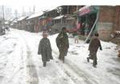 PAN: Residents of five districts in northeastern Badakhshan province on Wednesday said they could die of starvation due to shortage of food stuffs if roads blocked by continued events of snow avalanches were not cleared. The snowfall has blocked several parts of the highways connecting Raghistan, Yawan, Kuhistan, Shaghnan and Kofab districts to provincial capital Faizabad. Residents of these areas fear the blockades could lead to severe shortage of foods. Full news...
-
October 27, 2009 :: RSS :: Print :: Email
 CNN: A young boy dressed in women's clothing, his face caked in make-up, dances the night away for a crowd of men. The bells on his feet chime away, mimicking the entertainment and sexual appeal of female dancers. But there is no mistaking his pubescent body and face as he concentrates, focusing on every step in order to please his master and his master's guests. Full news...
-
October 20, 2009 :: RSS :: Print :: Email
 IRIN: Ahmad Wali died in a bomb blast in Kandahar city on 25 August and Samim was killed in a suicide attack in Kabul on 15 September. Both men left grieving families with little capacity to cope on their own. “We could not afford to pay the rent so we left our old home and have moved into a small room outside the city,” said Samim’s eldest son, Arif. “My children cannot go to school any more because we cannot afford their education,” said Wali’s widow, Pashtana. Full news...
-
October 18, 2009 :: RSS :: Print :: Email
 IRIN: He sleeps in derelict outbuildings, eats dirty leftovers, wears tattered clothes and spends his days on the streets. He knows neither his name, nor his age, nor any relatives. People give him a wide berth despite - or because of - his frantic begging gestures. He is middle-aged and mentally ill in Kabul city. At least one in 10 of the over 700 street beggars arrested in Kabul in the past 10 months have mental disorders of some kind, according to officials in the government’s anti-begging commission. Full news...
-
October 6, 2009 :: RSS :: Print :: Email
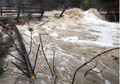 IRIN: Dozens of families from the Kaldar and Shortepa districts of Balkh Province, in northern Afghanistan, have been displaced from their homes after the Amu River burst its banks, provincial officials said. The Amu - also called the Oxus - is the longest river in Central Asia, with a basin including the territories of Afghanistan, Tajikistan, Turkmenistan and Uzbekistan. Full news...
-
October 6, 2009 :: RSS :: Print :: Email
 UNDP: This year's HDI, which refers to 2007, highlights the very large gaps in well-being and life chances that continue to divide our increasingly interconnected world. The HDI for Afghanistan is 0.352, which gives the country a rank of 181 out of 182 countries. By looking at some of the most fundamental aspects of people’s lives and opportunities the HDI provides a much more complete picture of a country's development than other indicators, such as GDP per capita. Full news...
-
October 5, 2009 :: RSS :: Print :: Email
 IRIN: Despite billions of dollars of aid over the past eight years Afghanistan has slipped down the latest UN human development index which ranks it 181 out of 182 countries, with only Niger lower. The UN Development Programme has been ranking countries on the basis of access to health and education, life expectancy and living standards since 1990, but the only other time the country was ranked globally was in 2007 when it was listed as fifth from bottom. Full news...
-
September 27, 2009 :: RSS :: Print :: Email
 PAN: The man identified as Ahmadullah shot his wife, his children, wife and children of his brother before turning the gun on himself at the family's home in Ghuli village of the district, said district chief Yousuf Siraji. Siraji said the reason behind the suicide and murders is said be a family dispute that emerged in the family last week. Full news...
-
September 21, 2009 :: RSS :: Print :: Email
 FT.com: Nato forces are losing ground against the insurgency in Afghanistan. Afghans look as though they will continue to be led by a corrupt and warlord-influenced government, of doubtful legitimacy after the flawed and still inconclusive recent elections. As casualties mount and spread, a backlash is building in allied countries against a war their citizens increasingly see as both pointless and doomed. Full news...
-
September 17, 2009 :: RSS :: Print :: Email
 BBC Persian (Translated by RAWA): Poverty in the month of Ramadan shows itself with much harsher face in the dinning cloth of most of the families in Kabul city.... The monthly income of Marzia is 1,500 Afghanis equivalent to 30 dollars which she takes from the government as her husband's pension. Once her husband has been a worker of municipality but now extremely needs to be cured and this money is even not enough for the cost of his sickness. This man already was paralyzed and now he is also suffering from mental problem and is always needs someone to take care of him. Full news...
-
September 15, 2009 :: RSS :: Print :: Email
 CNN: Afghanistan's reputation as the world's leading narcotics supplier is well-known, but in a squalid ruin in Kabul, the country hides a darker secret -- a huge home grown drug addiction problem now on the brink of fueling an HIV/AIDS epidemic. Here junkies lie in their own filth, wasted limbs poking out of blood-spattered clothing as they blank out the abject misery of their surroundings. In one room, a veritable narcotics bazaar offers pills and drug paraphernalia -- with hits retailing at less than $4. Full news...
-
September 14, 2009 :: RSS :: Print :: Email
 IRIN: Twenty-eight deaths from cholera and/or acute watery diarrhoea (AWD) have been reported in Afghanistan in the past two months, the Ministry of Public Health (MoPH) has said. At least 673 cases of AWD and/or cholera had been reported in 11 of the country’s 34 provinces, it said. According to the World Health Organization, cholera, which is rarely reported in Afghanistan, is an acute diarrhoeal infection caused by ingestion of the bacterium vibrio cholerae. Full news...
-
September 10, 2009 :: RSS :: Print :: Email
 IRIN: Afghanistan’s anti-begging commission has arrested hundreds of beggars in Kabul in the past few months, but most are released if relatives guarantee they will not beg again, officials said. The government outlawed street-begging in November 2008 and set up a commission - made up of different government bodies and the Afghan Red Crescent Society (ARCS) - to end street-begging in the capital. Full news...
-
August 6, 2009 :: RSS :: Print :: Email
 Toronto Star: In dozens of mountain hamlets in this remote corner of Afghanistan, opium addiction has become so entrenched that whole families – from toddlers to old men – are addicts. Cut off from the rest of the world by glacial streams, the addiction moves from house to house, infecting entire communities. From just one family years ago, at least half the people of Sarab, population 1,850, are now addicts. Full news...
-
July 22, 2009 :: RSS :: Print :: Email
 IRIN: More than 200,000 Afghans have been expelled from Iran in the past six months, marking a 25 percent increase on the same period in 2008, according to officials. Most of the deportees are single males who had gone to Iran for employment opportunities. Hosting some 900,000 registered Afghan refugees, Iran has deported about one million Afghans considered "illegal migrants" over the past three years, according to aid agencies and government officials. Full news...
-
July 15, 2009 :: RSS :: Print :: Email
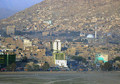 IRIN: Most people in the Afghan capital Kabul live in illegal, unplanned and sub-standard houses that are prone to natural disasters and lack water and sanitation facilities, according to government officials. "Of the [estimated] five million people currently living in Kabul, at least three million are residing in illegal and unplanned houses," Abdul Wahab Sadaat, deputy director of city services at the Kabul Municipality, told IRIN. Full news...
-
July 1, 2009 :: RSS :: Print :: Email
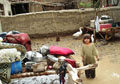 IRIN: Thousands of people who lost their houses in January-May flooding in different parts of Afghanistan need help to repair or rebuild their homes, or find new ones, before winter. “Where houses are damaged or completely destroyed, people are in urgent need of shelter,” Asif Khairkhwa, chairman of the Afghan Red Crescent Society (ARCS) in the northern province of Balkh, told IRIN. “People should have a shelter before the winter.” Full news...
-
June 24, 2009 :: RSS :: Print :: Email
 IRIN: Family planning services are available in over 90 percent of health facilities across Afghanistan but the number of women using them in rural areas is too low, according to the Ministry of Public Health (MoPH). Hamida Ebadi, director of MoPH’s reproductive health unit, reckoned only 14-15 percent of women in rural and remote regions use family planning services. Most pregnancy-related deaths happen in remote, isolated and insecure areas of the country where people have poor access to quality health services, officials say. Full news...
-
June 24, 2009 :: RSS :: Print :: Email
 UNICEF: Child labour is an issue of growing concern in Afghanistan. The ongoing political tensions, insecurity and rising food prices have put the livelihoods of vulnerable families and children increasingly at risk. In Afghanistan, as in many other countries, the child labour problem is rooted in poverty and in socioeconomic inequalities based on gender and disability. Already, 30 percent of Afghan children aged 5 to 14 are engaged in some form of work. Full news...
-
June 23, 2009 :: RSS :: Print :: Email
 Channel 4 News: Nima Elbagir travels to Afghanistan's border with Pakistan, where a programme to eradicate opium production has led to an upsurge of child smugglers. In Tsasubi, village elders told us that forced to abandon poppy farming, and receiving no help in creating alternative livelihoods, they had turned to smuggling. Full news...
-
June 23, 2009 :: RSS :: Print :: Email
 PAN (Translated by RAWA): An 18-year-old Afghan boy named Nabiullah set himself on fire on his father’s grave and died in hospital in the in Takhar province, in Northern Afghanistan. ... according to information Nabiullah was the youngest one in his family and had lost his father in recent years but his elder brothers stopped him from going to school and forced him to do a job... it is possible that the economic and family problems were causes of the boy’s self-immolation. Full news...
-
June 22, 2009 :: RSS :: Print :: Email
 IRIN: Over 1,000 families in a camp for internally displaced persons (IDPs) in Kandahar Province, southern Afghanistan, have opted to return to their home areas in the north and northwest of the country because of worsening insecurity and lack of aid at the camp. Mohammad Azam Nawabi, director of the refugees’ department in Kandahar, told IRIN 1,087 families had formally expressed their desire to return. Full news...
-
June 17, 2009 :: RSS :: Print :: Email
 IRIN: Farmers in Afghanistan’s top potato-producing province are complaining about declining profits, mainly because of cold weather, lack of storage facilities and bad roads. Potato cultivation in Bamyan Province, central Afghanistan, employs thousands of people and output can top 150,000 tons a year, according to the Ministry of Agriculture, Irrigation and Livestock. Full news...
-
June 17, 2009 :: RSS :: Print :: Email
 The National: Juma Gul’s muffled crying became noticeable only when she wiped the tears away using her burqa or slumped forward with her head in her hands. Speaking Uzbek, she described how she made the equivalent of about Dh440 by selling her baby daughter off for marriage. The girl’s fianc? had memorised the Quran and his father promised that her virginity would be respected until she was an adult. The couple eventually wed four years ago, when she was eight and he was in his late twenties. Full news...
-
June 10, 2009 :: RSS :: Print :: Email
 RAWA News: Mohammad Hashim Zare, the governor of Jowzjan province in Northern Afghanistan, has been accused of wasting the aid donated to the people of this province by Turkmenistan, central government and other organizations which has been sent to the flood-affected people in that province. Ferouza Quraishi, the deputy of the Provincial Council of Jowzjan called the governor inefficient” and said the aid has not reached those in need. Full news...
-
June 7, 2009 :: RSS :: Print :: Email
 IRIN: Poverty, community pressure and the low quality of education mean 25 percent of children in Afghanistan aged 7-14 are at risk of leaving school and drifting into exploitative work situations, according to a new report by a Kabul-based think-tank. The cost of education, lack of role models and family pressures were cited as reasons why children often ended up being exploited in backstreet workshops, factories or as domestic servants. Full news...
< Previous 1 2 3 ... 8 9 10 ... 15 16 17 Next >