





-
September 5, 2010 :: RSS :: Print :: Email
 PAN: During Ramadan, Dowlat Hussain wakes before the sun to perform his morning prayers, but there is nothing to eat for Sahari, he says, as “we live in a cave like animals”. Hussain and his family, like hundreds of others too poor to build or rent their own home, live in the honeycomb network of caves that surround the two destroyed Buddha statues in central Bamyan province. Full news...
-
August 19, 2010 :: RSS :: Print :: Email
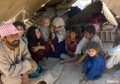 UKPA: According to a latest research, Afghanistan tops the list of 163 countries which face the risk of food shortages. The ongoing violence and the country’s vulnerability to climate extremes like drought and flood have made food security hit rock-bottom. Afghanistan is at greater risk of suffering disruption to its food supplies than any other country, new research has found. Full news...
-
July 11, 2010 :: RSS :: Print :: Email
 Tribune Media Services Inc.: As Gen. David Petraeus assumed his new command in Afghanistan earlier this month, he took up a strategy that has already failed - though not for the reasons most people assume. Certainly, as most everyone knows, the battle plan appears hopeless. Every night in Marjah, Taliban killers post "night letters" in mosques and other public places, warning city residents they will be killed if they cooperate with the Americans. Full news...
-
June 9, 2010 :: RSS :: Print :: Email
 The Washington Post: For rent on Street 6 in the neighborhood of Sherpur: a four-story, 11-bedroom dwelling of pink granite and lime marble, complete with massage showers, a rooftop fountain and, in the basement, an Asian-themed nightclub. Price: $12,000 a month. It’s a relative bargain in this district favored by former warlords and bureaucrats — Kabul’s version of Beverly Hills. Full news...
-
May 27, 2010 :: RSS :: Print :: Email
 Amnesty International: Afghan people continued to suffer widespread human rights violations and violations of international humanitarian law more than seven years after the USA and its allies ousted the Taliban. Access to health care, education and humanitarian aid deteriorated, particularly in the south and south-east of the country, due to escalating armed conflict between Afghan and international forces and the Taliban and other armed groups. Conflict-related violations increased in northern and western Afghanistan, areas previously considered relatively safe. Full news...
-
May 19, 2010 :: RSS :: Print :: Email
 PAN: High unemployment and deteriorating security is forcing hundreds of Afghan youths to risk an often perilous journey with ruthless smugglers in the search of a better life. Some pay with their lives. Others, such as Sher Rahman, spend thousands of dollars for the journey only to find themselves right back in Afghanistan. Full news...
-
May 10, 2010 :: RSS :: Print :: Email
 IRIN: It is well known that the Taliban, local criminals and international drug cartels profit enormously from the drug trade; that corruption is rife; and that huge amounts of aid money are pouring into Afghanistan. Less clear is the effect of all this on government power and the rule of law on which humanitarian aid organizations depend to carry out their mandate. Full news...
-
April 6, 2010 :: RSS :: Print :: Email
 Reuters: The world is ignoring the daily deaths of more than 850 Afghan children from treatable diseases like diarrhoea and pneumonia, focusing on fighting the insurgency rather than providing humanitarian relief, Save the Children said on Wednesday. According to the British charity, a child dies in the impoverished, war-torn nation every two minutes - mainly due to poverty, malnutrition and a lack of basic healthcare - and Afghan children have the worst chance in the world of surviving to their fifth birthday. Full news...
-
March 30, 2010 :: RSS :: Print :: Email
 The Associated Press: The majority of Afghans live in dire poverty, despite an estimated $35 billion in aid being poured into the country between 2002 to 2009, the United Nations said Tuesday.A report by the office of the U.N. High Commissioner for Human Rights claims that over a third of Afghans live in "absolute poverty" and about the same number are only slightly above the poverty line. Full news...
-
March 19, 2010 :: RSS :: Print :: Email
 Reuters: Afghanistan is the hardest place in the world to be a child, the South Asia regional director for UNICEF said, with high child mortality rates, poor levels of nutrition and rampant sexual abuse. "The situation in Afghanistan as a whole is one of the most dramatic in South Asia and also in the world. Afghanistan is the most difficult place to be born as a child," Daniel Toole said on a visit to Afghanistan this week. Full news...
-
March 10, 2010 :: RSS :: Print :: Email
 The Los Angeles Times: The men come at dawn, a ragged, anxious collection of faces peeking through scarves and hoping for work as they stand in a traffic circle beneath billboards advertising war heroes and washing machines. They are bricklayers, gardeners, hole diggers and carpenters. Sometimes they are tapped on the shoulder, most times they are not, so they hunch amid the cars and fruit stands, knowing that the higher the sun climbs the lower their chances of returning home with money in their pockets. Full news...
-
March 6, 2010 :: RSS :: Print :: Email
 DAWN: Almost half of school-age children in Afghanistan do not have access to education, President Hamid Karzai said Saturday as he inaugurated the new school year. “Five million school-age children in our country do not go to school, some because of war or because their schools have been closed by the Taliban or others, some because they do not have the ability to go to schools,” he said. Full news...
-
February 22, 2010 :: RSS :: Print :: Email
 The Washington Post: Afghanistan’s biggest private bank -- founded by the Islamic nation’s only world-class poker player -- celebrated its fifth year in business last summer .... Less publicly, Kabul Bank's boss has been handing out far bigger prizes to his country’s U.S.-backed ruling elite: multimillion-dollar loans for the purchase of luxury villas in Dubai by members of President Hamid Karzai’s family, his government and his supporters. Full news...
-
February 4, 2010 :: RSS :: Print :: Email
 The Canadian Press: There's a lot the sooty-faced boy doesn't know. His own name, for one thing. Or how much money he earns dishing out bowls of rice from his weathered metal stand. But he knows it's his job to feed his family. The boy leans an arm on the counter to chat with a visitor. If he had a dish rag tossed over one shoulder and a white T-shirt stretched over a beer gut, he'd look like a short-order cook at some Canadian greasy-spoon diner. Full news...
-
February 3, 2010 :: RSS :: Print :: Email
 The Huffington Post: In Shinwar, a district of Nangarhar province, there are two markets, one called Shadal and the other, Pikheh... these markets have one main commodity. And that commodity is women. In Nangarhar markets exist where women are sold. Cases have been reported where a woman was sold with her five children. Another woman was sold to five different people and returned back to the original man who sold her, then killed her. Full news...
-
February 2, 2010 :: RSS :: Print :: Email
 AFP: From the watchtower at an Afghan outpost, the Dutch soldiers can follow the growth of the pretty poppies that may one day pay for the weapons that kill them or their comrades. Taliban insurgents waging an increasingly deadly campaign against foreign troops make at least 100 million dollars a year from taxing Afghanistan's opium trade -- the world's biggest, US and Afghan officials say. Full news...
-
January 28, 2010 :: RSS :: Print :: Email
 Channel 4 News: Women were promised greater protection after the invasion of Afghanistan, but Nima Elbagir finds an increasing number have forced to self-inflict injuries to escape abuse. When the Taliban were still in power the liberation of Afghanistan’s women was a cause celebre in the west - a moral justification for the invasion. Yet by the end of last year the United Nations was worriedly reporting that the number of violent incidents against women had risen to their highest since the fall of the Taliban. Full news...
-
January 26, 2010 :: RSS :: Print :: Email
 Geo TV: The suffering of Afghanistan’s people has reached "unbearable" levels as the conflict has intensified and spread across the country, a top international Red Cross official said Tuesday. Decades of conflict have impacted every family in the country, Pierre Kraehenbuehl, director of operations at the International Committee of the Red Cross (ICRC), told a news conference in Tokyo. Full news...
-
January 21, 2010 :: RSS :: Print :: Email
 The Canadian Press: Pity the poor Kabul traffic police officer. Adding to the hazards of the job - dust, chaotic traffic and the occasional beatings from irate drivers - comes new insult to injury: No pay. The government just doesn't have the money right now, yet another sign of the precarious state of the country. Shafi Muhammad said he wasn't paid last month, but he's been promised he'll get his money at the end of this month. Full news...
-
January 19, 2010 :: RSS :: Print :: Email
BBC News: Afghans paid $2.5bn (£1.5bn) in bribes over the past 12 months, or the equivalent of almost one quarter of legitimate GDP, a UN report suggests. Surveying 7,600 people, it found nearly 60% more concerned about corruption than insecurity or unemployment. More than half the population had to pay at least one bribe to a public official last year, the report adds. The findings contrast sharply with a recent BBC survey in which the economy appeared to top Afghan concerns. Full news...
-
January 12, 2010 :: RSS :: Print :: Email
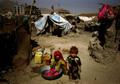 IRIN: Hundreds of families allegedly forced out of their homes in Kapisa Province, northeastern Afghanistan, by clashes between Taliban insurgents and pro-government Afghan and foreign forces have sought refuge in the eastern outskirts of Kabul. “There is always fighting, bombing and insecurity in Nejrab and Alasaay,” said one displaced man referring to the two Kapisa districts affected. He said he had lost his 15-year-old son in the fighting. Full news...
-
January 10, 2010 :: RSS :: Print :: Email
 The New York Times: In Kabul, even a traffic jam can provoke a comment on this Islamic nation's dismal state, which most people here believe is at its bleakest since the U.S. invaded to topple the Taliban in 2001. It's a striking sentiment when you consider it comes after eight years of international intervention, $60 billion in foreign aid and the lives of thousands of foreign troops and Afghan civilians. Full news...
-
December 27, 2009 :: RSS :: Print :: Email
 DPA: Aid organization Medecins Sans Frontieres (MSF) released Monday its list of the ten worst global humanitarian crises for 2009, with places like Somalia, Yemen and Afghanistan making the grouping, along with failing efforts to fight malnutrition and HIV/AIDS. Full news...
-
December 21, 2009 :: RSS :: Print :: Email
 Xinhua: Corruption and insecurity remained the big challenges for UN aid agencies to reach vulnerable and needy Afghans in the war-torn country, a UN official said Monday. "Insecurity and corruption are increasing the cost of our ability to deliver and transport goods and service to the needy people," Wael Haj-Ibrahim, head of United Nations Office for Coordination of Humanitarian Affairs (OCHA), told a press conference here. Full news...
-
December 21, 2009 :: RSS :: Print :: Email
 The Associated Press: While international forces in Afghanistan battle militants hiding in the mountains, aid agencies are fighting an even more elusive enemy: malnutrition. The World Food Program and UNICEF have launched a project to feed thousands of mothers and children — some too weak to cry. Aid workers hope a high-protein diet distributed through a network of village clinics can help them through the winter. Full news...
-
December 12, 2009 :: RSS :: Print :: Email
 Global Research: These military forces will not be going to Afghanistan to set up vaccination programs or conduct literacy classes for Afghan girls. They are going there as part of the most destructive military machine on the planet, to wreak violence. The military machine that has bombed wedding parties, that has held thousands of young Afghan men in Bagram prison without charges, that kicks down doors in the middle of the night—this machine is being strengthened and further unleashed. Full news...
-
December 11, 2009 :: RSS :: Print :: Email
 RAWA News: Based on UNICEF survey more than half of all children under age five suffer from malnutrition... average per capita monthly expenditure of nine million Afghans is less than 66 US cents a day ... but the mafia and puppet regime of such poor and devastated country, purchases a $4.2 million luxury apartment for residence of Zahir Tanin, and also a 5.4 million commercial space for the Consulate and the Permanent Mission to the United Nations. Full news...
-
December 3, 2009 :: RSS :: Print :: Email
 IRIN: Dozens of families who lost their homes after earthquakes in the eastern Afghan province of Nangarhar in April 2009 have moved to an informal settlement for internally displaced persons (IDPs) and called for urgent assistance. Two earthquakes measuring 5.5 and 5.1 on the Richter scale rocked Sherzad and Hesarak districts in Nangarhar Province on 16-17 April, killing 22 people, injuring 59 and destroying 290 houses; 300-600 livestock were also lost and 650 families made homeless, according to the UN Office for the Coordination of Humanitarian Affairs (OCHA). Full news...
-
November 25, 2009 :: RSS :: Print :: Email
 The FINANCIAL: Human rights activists have noted a large-scale growth in violence toward Afghan women, hundreds of whom are beaten, intimidated or sexually assaulted by men daily. According to the human rights activists' publication, the number of suicides among women has also grown... Over the last week, there were five such incidents. Full news...
-
November 20, 2009 :: RSS :: Print :: Email
 Reuters: Eight years after a U.S.-led invasion ousted the Taliban from power in Afghanistan, the war-ravaged state is the most dangerous place in the world for a child to be born, the United Nations said on Thursday. It is especially dangerous for girls, the United Nations Children’s Fund (UNICEF) said in launching its annual flagship report, The State of the World’s Children. Full news...
< Previous 1 2 3 ... 7 8 9 ... 15 16 17 Next >