





-
July 30, 2010 :: RSS :: Print :: Email
 The Financial Times: The suicide rate in the US army now exceeds the rate across the US as a whole, with an increasing number of active duty soldiers taking their lives due to stress, according to a in-depth army study into the effect of nine years of war on its troops. If deaths associated with high-risk behaviours – including drink-driving and drug overdoses – are taken into account, more soldiers are dying by their own hand than in combat, the report found. Full news...
-
July 15, 2010 :: RSS :: Print :: Email
 CNN: More U.S. soldiers killed themselves last month than in recent Army history, according to Army statistics released Thursday, confounding officials trying to reverse the grim trend. The statistics show that 32 soldiers killed themselves in June, the highest number in a single month since the Vietnam era. Twenty-one of them were on active duty, while 11 were in the National Guard or Army Reserve in an inactive status. Full news...
-
July 13, 2010 :: RSS :: Print :: Email
 IRIN: Esmatullah, 24, has been injecting heroin for over two years but he is unaware that sharing needles could infect him with HIV, hepatitis or other highly contagious blood-borne diseases. “I don’t know anything about these diseases and how they’re transferred from one person to another,” he told IRIN; he had recently been deported from Iran where he had become an addict. Full news...
-
July 3, 2010 :: RSS :: Print :: Email
 The Canadian Press: Master Cpl. Jody Mitic was a sniper on patrol with his unit in Kandahar province in January 2007 when he stepped on a land mine and lost both legs below the knee. In the split second it took for the charge to explode, Mitic's life changed instantly, irrevocably. Mitic is one of the more than 500 Canadian soldiers who have been wounded in action in Afghanistan; even more suffer from "invisible wounds" that range from mild depression to debilitating post-traumatic stress syndrome, experts say. Full news...
-
June 19, 2010 :: RSS :: Print :: Email
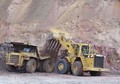 The New York Times: Mining companies around the world are eager to exploit Afghanistan’s newly discovered mineral wealth, but executives of Western firms caution that war, corruption and lack of roads and other infrastructure are likely to delay exploration for years. “Afghanistan could be one of the leading producers of copper, gold, lithium and iron ore in the world,” said Ian Hannam, a London-based banker and mining expert with JP Morgan. Full news...
-
June 13, 2010 :: RSS :: Print :: Email
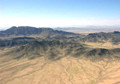 The New York Times: The United States has discovered nearly $1 trillion in untapped mineral deposits in Afghanistan, far beyond any previously known reserves and enough to fundamentally alter the Afghan economy and perhaps the Afghan war itself, according to senior American government officials. An internal Pentagon memo, for example, states that Afghanistan could become the “Saudi Arabia of lithium,” a key raw material in the manufacture of batteries for laptops and BlackBerrys. Full news...
-
June 9, 2010 :: RSS :: Print :: Email
 IRIN: Nowhere in the world are as many mothers dying from pregnancy and birth-related complications as in Badakhshan Province, northeastern Afghanistan, where maternal mortality figures are estimated at 6,000 per 100,000 live births, say agencies. Yet, the relatively peaceful province has more maternal healthcare facilities than Helmand, Zabul, Uruzgan and several others. Full news...
-
June 7, 2010 :: RSS :: Print :: Email
 PAN: About 3,000 people lose their lives every year in Kabul due to pollution-related diseases, a top health official said. Respiratory, heart and lung diseases were the most common illnesses associated with pollution, said Dr. Amanullah Hussaini, who heads the environmental safety department at the Ministry of Health. Full news...
-
May 10, 2010 :: RSS :: Print :: Email
 CAIVP: While the Afghanistan and Iraq wars have cost the United States over $1 trillion, 5,000 deaths, and 30,000 maimings, there is yet another painful cost that is rarely discussed by the American public. Post-traumatic stress disorder (PTSD) is plaguing both active and retired members of the Armed Forces. Multiple, repeated deployments to intense war theaters are taking a serious psychological toll on soldiers (and their families), and the statistical trend continues to worsen. Full news...
-
May 9, 2010 :: RSS :: Print :: Email
 IRIN: Flash floods have killed over 80 people, wounded 240 and damaged more than 5,000 houses in 12 of Afghanistan’s 34 provinces over the past 18 days, the Afghanistan National Disasters Management Authority said. The floods have also killed livestock and ruined fields of crops. Full news...
-
May 5, 2010 :: RSS :: Print :: Email
 The Media Line: Afghanistan is the worst county in the world for a woman to be a mother, a new report says. The Mothers’ Index in Save the Children’s report, State of the World’s Mothers 2010, compares the well-being of mothers and children in 173 countries and concludes that the well-being of mothers and children is at the highest risk in Afghanistan. Full news...
-
May 1, 2010 :: RSS :: Print :: Email
 The Independent: More than 30 years after I watched the Soviet army slithering in their great T-72s past their new headquarters at Bagram north of Kabul, more than nine years since the first Americans took over the same airbase, I have gazed at last upon the treasures of Bagram. Full news...
-
April 27, 2010 :: RSS :: Print :: Email
 PAN (Translated by RAWA): 22 children under the age of five and 15 children below the age of one die every hour. And every 30 minutes, a mother dies during childbirth. These statistics were announced by Dr. Suraya Dalil, Deputy Minister for Policy and Planning and Acting Minister of Ministry of Public Health (MoPH) in a press conference in Kabul with Dr. Eric Laroche, Assistant Director-General Health Action in Crises, World Health Organization (WHO). Full news...
-
March 23, 2010 :: RSS :: Print :: Email
 AFP: An avalanche struck a remote mountain area of northern Afghanistan two weeks ago, killing at least 35 people and burying houses beneath the snow, a local official said Tuesday. The disaster struck in Badakhshan province in the far north, but harsh weather and the remoteness of the province bordering China, Pakistan and Tajikistan meant local officials had to travel for weeks to seek help. Full news...
-
February 11, 2010 :: RSS :: Print :: Email
 HealthCanal.com: Between 2002 and 2008, fewer than 10 percent of U.S. veterans of the wars in Iraq and Afghanistan who were newly diagnosed with post-traumatic stress disorder received the recommended course of care for their condition at VA health facilities, according to a study by researchers at the San Francisco VA Medical Center and the University of California, San Francisco. Full news...
-
February 10, 2010 :: RSS :: Print :: Email
 AFP: Rescuers recovered the bodies of 165 people killed by a series of avalanches on a treacherous Afghan mountain pass in one of the country's worst such disasters, an official said on Wednesday. An AFP photographer on the scene said massive avalanches had pushed vehicles from the road into the deep valley below, with at least nine passenger cars and two large buses lying upside down on the valley floor. Full news...
-
February 1, 2010 :: RSS :: Print :: Email
 AFP: Afghanistan, one of the world's poorest countries, is sitting on mineral and petroleum reserves worth an estimated one trillion dollars, President Hamid Karzai said Sunday. "The initial figures we have obtained show that our mineral deposits are worth a thousand billion dollars -- not a thousand million dollars but a thousand billion," he said. Full news...
-
January 12, 2010 :: RSS :: Print :: Email
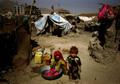 IRIN: Hundreds of families allegedly forced out of their homes in Kapisa Province, northeastern Afghanistan, by clashes between Taliban insurgents and pro-government Afghan and foreign forces have sought refuge in the eastern outskirts of Kabul. “There is always fighting, bombing and insecurity in Nejrab and Alasaay,” said one displaced man referring to the two Kapisa districts affected. He said he had lost his 15-year-old son in the fighting. Full news...
-
January 10, 2010 :: RSS :: Print :: Email
 The Independent: Britain's ability to wage an effective military campaign in Afghanistan is under growing pressure as the number of soldiers unfit for battle has risen to one in five. As UK forces prepare to begin yet another year embroiled in a gruelling struggle against the Taliban, defence chiefs have confirmed that more than 16,000 troops are not fit enough to fight. Full news...
-
January 10, 2010 :: RSS :: Print :: Email
 Gulf Times: The year 2009 has been the deadliest for Afghan children since 2001, according to the Afghanistan Rights Monitor, a Kabul-based human rights group. From January to December 2009, about 1,050 children died in suicide attacks, roadside blats, air strikes and in the cross-fire between Taliban insurgents and pro-government Afghan and foreign forces, states ARM. Full news...
-
December 27, 2009 :: RSS :: Print :: Email
 DPA: Aid organization Medecins Sans Frontieres (MSF) released Monday its list of the ten worst global humanitarian crises for 2009, with places like Somalia, Yemen and Afghanistan making the grouping, along with failing efforts to fight malnutrition and HIV/AIDS. Full news...
-
December 21, 2009 :: RSS :: Print :: Email
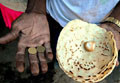 Xinhua: Corruption and insecurity remained the big challenges for UN aid agencies to reach vulnerable and needy Afghans in the war-torn country, a UN official said Monday. "Insecurity and corruption are increasing the cost of our ability to deliver and transport goods and service to the needy people," Wael Haj-Ibrahim, head of United Nations Office for Coordination of Humanitarian Affairs (OCHA), told a press conference here. Full news...
-
December 21, 2009 :: RSS :: Print :: Email
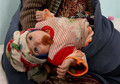 The Associated Press: While international forces in Afghanistan battle militants hiding in the mountains, aid agencies are fighting an even more elusive enemy: malnutrition. The World Food Program and UNICEF have launched a project to feed thousands of mothers and children — some too weak to cry. Aid workers hope a high-protein diet distributed through a network of village clinics can help them through the winter. Full news...
-
December 10, 2009 :: RSS :: Print :: Email
 MSF: Afghanistan has some of the worst health indicators in the world. In a province like Helmand, the noise of war is heard around the clock as helicopters take off in the night, and gunfire and rockets are audible in the distance. In this context, ordinary health problems become medical emergencies because movement from villages to towns is very dangerous, and in many places simply impossible. Full news...
-
December 3, 2009 :: RSS :: Print :: Email
 IRIN: Dozens of families who lost their homes after earthquakes in the eastern Afghan province of Nangarhar in April 2009 have moved to an informal settlement for internally displaced persons (IDPs) and called for urgent assistance. Two earthquakes measuring 5.5 and 5.1 on the Richter scale rocked Sherzad and Hesarak districts in Nangarhar Province on 16-17 April, killing 22 people, injuring 59 and destroying 290 houses; 300-600 livestock were also lost and 650 families made homeless, according to the UN Office for the Coordination of Humanitarian Affairs (OCHA). Full news...
-
December 1, 2009 :: RSS :: Print :: Email
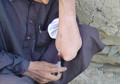 Xinhua: Afghan Minister of Public Health Sayed Mohammad Amin Fatime warned Tuesday that AIDS transmission among illegal drug users remains the main factor of spreading the disease in the post-Taliban country. "Addiction, especially using heroin through injection, continues to be the main channel of transmission of AIDS in Afghanistan," the minister said in a notice for Tuesday's World AIDS Day. Full news...
-
November 20, 2009 :: RSS :: Print :: Email
 Reuters: Eight years after a U.S.-led invasion ousted the Taliban from power in Afghanistan, the war-ravaged state is the most dangerous place in the world for a child to be born, the United Nations said on Thursday. It is especially dangerous for girls, the United Nations Children’s Fund (UNICEF) said in launching its annual flagship report, The State of the World’s Children. Full news...
-
November 11, 2009 :: RSS :: Print :: Email
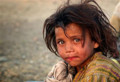 Health News: New Delhi - Eight years after the start of the international campaign to end Taliban rule in Afghanistan, more than half of all children under age five suffer from malnutrition, a UNICEF official told the German Press Agency dpa Wednesday. 'Nutrition is somewhat better (now), but not much,' said Daniel Toole, UNICEF's South Asia director, as the UN agency for children released a report tracking global progress in maternal and child nutrition. Full news...
-
November 5, 2009 :: RSS :: Print :: Email
 IRIN: The average per capita monthly expenditure of nine million Afghans is less than 66 US cents a day, and millions of other Afghans spend about $42 a month, according to a summary of Afghanistan’s new National Risk and Vulnerability Assessment (NRVA). NRVA 2007/08 was produced by the government with European Union funding and in collaboration with aid agencies. A bleak picture is painted. Full news...
-
October 29, 2009 :: RSS :: Print :: Email
 NBC News: Seventeen-year-old Shirin had been brought to the Herat Regional Hospital Burns Unit a few days before we met her. ... In the first seven months of this year, medical staff at the Herat’s burns unit – the only one of its kind in the entire country – said they have seen 51 cases of female self-immolation. Only 13 have survived. Full news...
< Previous 1 2 3 4 5 6 7 8 9 Next >