





-
March 15, 2011 :: RSS :: Print :: Email
 RFE/RL: Seventeenth-century Persian poet Saeb Tabrizi famously sang the praises of Kabul’s lush gardens and sparkling water, extolling “the beauty of her trees” and “colorful tulips” and beseeching Allah to “protect such beauty from the evil eye of man.” Some 400 years later, the so-called king of poets must be rolling over in his tomb, as the last three decades seem to have brought much evil to this ancient city that connects Central and South Asia. Full news...
-
February 14, 2011 :: RSS :: Print :: Email
 IRIN: Flash floods and heavy snowfall killed 25 people and damaged up to 3,000 houses in different parts of Afghanistan over the past two weeks, according to government officials. At least 20 people died and 53 have been injured in Parwan, Herat, Wardak and Daykundi provinces, the Afghanistan National Disasters Management Authority (ANDMA) said. Full news...
-
February 11, 2011 :: RSS :: Print :: Email
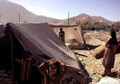 Reuters: Afghanistan could face a serious drought in 2011 that would make millions of poor go hungry and fuel instability as foreign troops seek to reverse surging violence in the battle against the Taliban. Low rainfall early in the wet season will likely threaten Afghanistan’s irrigated harvest, U.S. forecasts show, which with a surge in global grain prices could be devastating for a nation already ranked as having the world's worst food security. Full news...
-
February 10, 2011 :: RSS :: Print :: Email
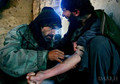 Reuters: Through a blue gate, they come for treatment in the early morning, faces wrapped in scarves against the cold. For now it’s a trickle, but their numbers are rising. “I try to keep it secret, especially from my mother,” said a 26-year-old HIV patient at a foreign-run clinic in the Afghan capital, Kabul. “If she knew I had HIV, she would die.” Full news...
-
February 1, 2011 :: RSS :: Print :: Email
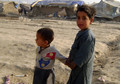 IRIN: ens of thousands of the internally displaced persons (IDPs) in Afghanistan are vulnerable to cold-related diseases but have little or no access to health services, according to aid agencies. Over 350,000 IDPs, including about 155,000 people displaced by conflict since November 2009, are living in camps and informal settlements in different parts of the country, the UN Refugee Agency (UNHCR) says. Full news...
-
January 24, 2011 :: RSS :: Print :: Email
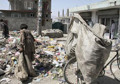 ENS: Mohammad Aref and his family are not looking forward to the Kabul summer. Last year, it meant stifling months shut up in the family home in the Khair Khana district, trying to avoid the fetid smell wafting in from the piles of rubbish in the surrounding streets. “We could not open windows to let in fresh air in any of the rooms all through the summer,” the 40-year-old said. Full news...
-
January 24, 2011 :: RSS :: Print :: Email
 Daily Mirror: THE war on terror is taking its toll on the mental state of British troops with a dramatic rise in the number seeking psychiatric help. The daily threat of roadside bombs, fierce gun battles and seeing comrades killed or horrifically maimed in the blood and dust of Afghanistan has led to a steep increase in the number of personnel suffering post-traumatic stress disorder. Full news...
-
January 23, 2011 :: RSS :: Print :: Email
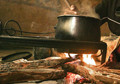 The Independent: The world’s deadliest pollution does not come from factories billowing smoke, industries tainting water supplies or chemicals seeping into farm land. It comes from within people’s own homes. Smoke from domestic fires kills nearly two million people each year and sickens millions more, according to the World Health Organisation (WHO). Full news...
-
January 13, 2011 :: RSS :: Print :: Email
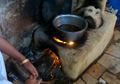 Reuters: As temperatures drop well below freezing during the country’s harsh winter, bombs and bullets from a near-decade long war against a Taliban-led insurgency are not the only threat -- just trying to light a home and stay warm can be deadly. “We were using gas for a lamp and cooking food on the bukhari (stove) and the gas bottle was too close and got too hot,” Mohammad said... Full news...
-
January 6, 2011 :: RSS :: Print :: Email
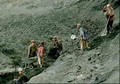 NNI: The Afghan government is eyeing on mining industry and exploration of underground natural resources to enhance the national income in the coming years, a statement released by the Ministry for Mines on Wednesday said. “The annual income of Afghanistan through mining at present is around 30 million U.S. dollars... Full news...
-
January 6, 2011 :: RSS :: Print :: Email
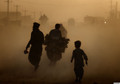 IRIN: Worsening air pollution in Kabul has forced the Afghanistan National Environmental Protection Agency (NEPA) to advise people to use masks or other protective devices during the morning and evening rush hours. The UN World Health Organization (WHO) says air pollution causes about two million premature deaths worldwide every year. Full news...
-
December 30, 2010 :: RSS :: Print :: Email
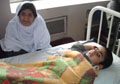 The Canadian Press: Tiny patients go two to a bed and overworked doctors are on the verge of burnout in the children’s ward of southern Afghanistan’s largest hospital. A steady flow of sick kids is pushing Kandahar city’s already overstretched Mirwais hospital beyond the brink. But pleas for badly needed doctors, equipment and beds seem to be falling on deaf ears. Full news...
-
December 30, 2010 :: RSS :: Print :: Email
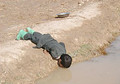 Medair: High in Afghanistan’s mountains, Yusif Habib, a father of five, lives in the remote village of Zermod-Payan. For generations, this tiny village's main source of drinking water has been a rushing mountain river. “Every day, I make seven trips to the river with two 20-litre jerry cans,” said Yusif. “And it is a long walk from the river, up the steep hill. It is very difficult in winter.” Full news...
-
December 16, 2010 :: RSS :: Print :: Email
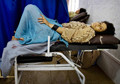 IRIN: At 4am, Abdul Malek and his pregnant wife were in a rented car heading to Boost Hospital in Lashkargah, capital of southern Helmand Province. The couple decided to leave their home in the Sangeen District as early as possible to avoid roadblocks by pro-government forces or being seen by anti-government forces. Full news...
-
December 8, 2010 :: RSS :: Print :: Email
 The Christian Science Monitor: Nine years and billions of dollars into the Afghanistan war the US government is eager to show progress. There's just one problem, say healthcare officials in Afghanistan. That claim, also peddled by the British government’s aid agency, the World Bank and at times by the Afghan government, isn't true. Full news...
-
December 1, 2010 :: RSS :: Print :: Email
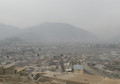 The Telegraph: Hamid Karzai, the Afghan president announced Thursday would join Friday as the official weekend and be declared holiday for the capital’s five million residents for the remainder of the winter. Kabul’s persistent fog of pale yellow pollution is estimated to hasten the deaths of 3,000 people each year due to respiratory illnesses according to Afghan health officials. Full news...
-
November 28, 2010 :: RSS :: Print :: Email
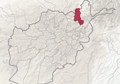 Reuters: The hills around dusty Nor Aaba are laced with gold but villagers have blocked work on a new mine in a dispute over jobs, a warning that Afghan plans to ramp up mining may bring trouble as well as treasure. Security and corruption problems that have made fighting the insurgency and setting up a credible central government so difficult... Full news...
-
November 23, 2010 :: RSS :: Print :: Email
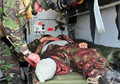 The Guardian: Acute care for the troops most seriously injured in Afghanistan is costing the government more than 500,000 Pound every week, figures suggest. The military wards at the Birmingham NHS foundation trust receive over 2m Pound every month from the Ministry of Defence to care for the dozens of troops who need the most specialised trauma care. Full news...
-
November 17, 2010 :: RSS :: Print :: Email
 The New York Times: “Why did you burn yourself?” asks the doctor. “If I threw myself from a building, I’d break an arm or a leg, but I wanted to die,” Halima answers. “That’s why I set myself on fire. I thought I would die instantly.” As an answer it is more how than why, but it is enough for Dr. Arif Jalali, the senior surgeon ... Full news...
-
November 14, 2010 :: RSS :: Print :: Email
 The Huffington Post: It was another day on the rocky hillside, as archaeologists and laborers dug out statues of Buddha and excavated a sprawling 2,600-year-old Buddhist monastery. A Chinese woman in slacks, carrying an umbrella against the Afghan sun, politely inquired about their progress. Full news...
-
November 2, 2010 :: RSS :: Print :: Email
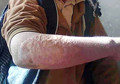 AFP: Mossa lives on the top of an Afghan mountain four hours' walk from the nearest road in one of the poorest parts of the world and cannot remember the last time he washed. A creeping pattern that looks like a fossilised fern decorates his right forearm -- the tell-tale sign that he has leprosy. Full news...
-
October 29, 2010 :: RSS :: Print :: Email
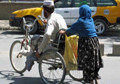 IRIN: The International Committee of the Red Cross (ICRC) has opened its seventh prosthetic and orthotic centre in Afghanistan to help rehabilitate permanently disabled people, but the man leading the programme says more centres are needed. Alberto Cairo, who has led ICRC’s orthopaedic programme in Afghanistan for 20 years, says he has never sat back for a moment at his busy duty station where new amputees seek artificial limbs every day. Full news...
-
October 26, 2010 :: RSS :: Print :: Email
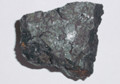 Reuters: Afghanistan is estimated to be sitting on $3 trillion worth of untapped mineral deposits, but poor infrastructure and investor caution are inhibiting development of its mining industry, its mines minister said. "This estimate is based only on 30 percent of the country's area; there is still 70 percent we have no idea about," Afghan Mines Minister Wahidullah Shahrani told Reuters... Full news...
-
October 15, 2010 :: RSS :: Print :: Email
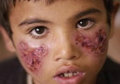 France 24: Afghanistan’s health authorities Friday appealed for international help in dealing with a parasitic disease that is believed to threaten millions in the impoverished country. Leishmaniasis, transmitted by a species of sandfly, threatened the health of 13 million Afghans, the World Health Organisation (WHO) said in a report on neglected tropical diseases. Full news...
-
October 12, 2010 :: RSS :: Print :: Email
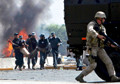 CNN: War casualties in a Kandahar hospital are “hitting record highs,” figures that illustrate the “deteriorating security situation in southern Afghanistan, the International Committee for the Red Cross said on Tuesday. Mirwais Regional Hospital had nearly 1,000 new patients with weapon-related injuries. Full news...
-
October 10, 2010 :: RSS :: Print :: Email
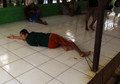 PAN: Over 60 percent of Afghans suffered from mental health problems and stress due to the decades of war, poverty, political vulnerability and poor health facilities, the health minister said on Sunday. Speaking at a ceremony marking the World Mental Health Day, Dr Suraya Dalil said 'major steps' had been taken to improve the health sector, but added those measures were still insufficient and there was a need for doing more. Full news...
-
August 19, 2010 :: RSS :: Print :: Email
 UKPA: According to a latest research, Afghanistan tops the list of 163 countries which face the risk of food shortages. The ongoing violence and the country’s vulnerability to climate extremes like drought and flood have made food security hit rock-bottom. Afghanistan is at greater risk of suffering disruption to its food supplies than any other country, new research has found. Full news...
-
August 12, 2010 :: RSS :: Print :: Email
 e-Ariana - Opinion: Afghanistan Constitution Article 15 states; “The state shall be obligated to adopt necessary measures to protect and improve forests as well as the living environment.” Afghan Government has violated this article. In January of 2009 the Afghanistan Ministry of Public Health stated in a press release that 3,000 people may die in Kabul in a one year time due to air pollution. Subsequently, a state of emergency was declared by the government. Full news...
-
August 11, 2010 :: RSS :: Print :: Email
 Times News World: Where Al-Qaeda leader Osama bin Laden might have hid lie a trillion-dollar treasure chest of gold, copper, cobalt and more than twenty other precious minerals. US experts expressed that this startling discovery could dramatically turn the financial tables of the American-created, nine-year-old battlefield. Full news...
-
July 31, 2010 :: RSS :: Print :: Email
 BBC Persian (Translated by RAWA): A recent research in Afghanistan shows that the number of women committing suicide in the country has been increasing. Faiz Mohammad Kakkar, the advisor of the president of Afghanistan in healthcare matters who took part in this research said that the reason for 90% of the suicides were acute depression or mental illnesses. Full news...
< Previous 1 2 3 4 5 6 7 8 9 Next >