





-
April 8, 2011 :: RSS :: Print :: Email
 IWPR: After several years of attempting to earn a living by growing crops other than poppies, frustrated farmers in Kapisa province are once again producing the raw material for heroin. They say soaring drug prices, along with the government’s failure to fulfill the promises it made as part of its eradication program, left them no choice. Full news...
-
April 7, 2011 :: RSS :: Print :: Email
 PAN: The number of women toiling away alongside their husbands in the fields, construction and other hard labour is increasing in central Bamyan province, with many having to give up school to contribute to the family’s finances. Zahra, 36, lives in Surkh, and says she has worked as a farmhand for the past eight years. Full news...
-
February 7, 2011 :: RSS :: Print :: Email
 The Huffington Post: As the U.S. military involvement in Afghanistan enters its 10th year, it is notable that most Afghan children have never known peace. Unlike confrontations fought on distant battlefields, the inherent peril of war has found intimacy within their homes and villages. When the threat of dying is real and ever-present, it shapes your view of the world. Full news...
-
January 23, 2011 :: RSS :: Print :: Email
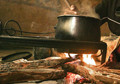 The Independent: The world’s deadliest pollution does not come from factories billowing smoke, industries tainting water supplies or chemicals seeping into farm land. It comes from within people’s own homes. Smoke from domestic fires kills nearly two million people each year and sickens millions more, according to the World Health Organisation (WHO). Full news...
-
January 21, 2011 :: RSS :: Print :: Email
 IWPR: Shahbaz stands at the Kotai Sangi junction in Kabul with a set of builder’s tools, just as he does every day, hoping someone will take him on. “I have nine family members and I need to earn some money to feed my children,” he told the Institute for War and Peace Reporting (IWPR). “But there isn’t any work. I come in the morning and leave in the evening just like that.” Full news...
-
January 19, 2011 :: RSS :: Print :: Email
 UPI: International partners teamed up with Afghan leaders to discuss the seriousness of food security issues in the country, the World Food Program said. Louis Imbleau, the WFP representative in Afghanistan, met with Afghan leaders in Kabul to discuss bilateral measures needed to address food shortages in the war-torn country. Full news...
-
January 16, 2011 :: RSS :: Print :: Email
 Xinhua: No education, lack of food and winter clothes. In Afghanistan’s capital Kabul, hundreds of war displaced children and their families are crying for relief assistance from the government. Currently, there are 804 families living in the slum, in west of the city, with the largest family of 15 children. “We do not have enough food and clothes. We need help,” said Wakiltawos Khan, head of the slum. Full news...
-
January 13, 2011 :: RSS :: Print :: Email
 RFE/RL: Early each morning, the schoolchildren of the Aqibi Silo neighborhood emerge from their homes on a hillside near the center of Kabul.But they don’t go to class. Instead, they go off to fetch water -- over and over again -- until long after the school day is done. They begin by tumbling down the narrow footpaths carrying brightly colored plastic canisters as light as balloons. Full news...
-
January 13, 2011 :: RSS :: Print :: Email
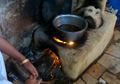 Reuters: As temperatures drop well below freezing during the country’s harsh winter, bombs and bullets from a near-decade long war against a Taliban-led insurgency are not the only threat -- just trying to light a home and stay warm can be deadly. “We were using gas for a lamp and cooking food on the bukhari (stove) and the gas bottle was too close and got too hot,” Mohammad said... Full news...
-
January 11, 2011 :: RSS :: Print :: Email
 IFRC: Harsh winters are always a major cause for concern in Afghanistan. The country's geography and its unstable security situation pose a huge challenge to international organizations trying to assist vulnerable communities in remote villages. When the temperature drops, it becomes difficult for people in remote areas to find food, with farmers unable to provide a solution in the harsh climatic conditions. Full news...
-
January 4, 2011 :: RSS :: Print :: Email
 CNN: Five-year-old Marjan sniffles from the cold as she struggles under her load. Hoisted on her back is a bag almost as big as she is. Instead of going to school, Marjan scavenges for hours with her 10-year-old aunt collecting trash. It is a heavy burden for such a small child but a necessary one. Full news...
-
January 1, 2011 :: RSS :: Print :: Email
 Reuters: Worsening security and enduring conservative Islamic customs prevented almost five million Afghan children from going to school in 2010, a government official said on Saturday. The strict Islamist Taliban were ousted from power by U.S.-backed Afghan forces nearly a decade ago, but many women are still not able to work outside the home and girls are prevented from attending school in remote parts of the country. Full news...
-
January 1, 2011 :: RSS :: Print :: Email
 UNAMA: Abdul Karim (not his real name) is a nine-year-old Afghan child. He waits under the street traffic light in downtown Herat for the cars to come and cleans their windscreens in the hope of gleaning some money. Abdul is the only breadwinner for his three-member family. He lost his drug-addicted father two years ago, and now supports his family by doing this hard work every day, sometimes begging. Full news...
-
December 30, 2010 :: RSS :: Print :: Email
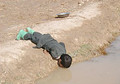 Medair: High in Afghanistan’s mountains, Yusif Habib, a father of five, lives in the remote village of Zermod-Payan. For generations, this tiny village's main source of drinking water has been a rushing mountain river. “Every day, I make seven trips to the river with two 20-litre jerry cans,” said Yusif. “And it is a long walk from the river, up the steep hill. It is very difficult in winter.” Full news...
-
December 25, 2010 :: RSS :: Print :: Email
 VOA: Growing insecurity and unemployment in Afghanistan is forcing Afghans into the capital, across borders and into the insurgency looking for work. Every day hundreds of men gather at Kote Sangi; one of the busiest intersections in Kabul. They fill the intersection waiting for work; they pass time talking and joking over cups of tea. Full news...
-
December 19, 2010 :: RSS :: Print :: Email
 Reuters: Afghan Abdul Wahab swings a heavy sledgehammer down onto a red hot piece of metal to mold it into a truck part, sweat dripping down a face marked with grime and soot from the fire, and with a focus rare for an 11-year-old. Wahab is one of about 1.2 million Afghan children in part or full time work, the government says... Full news...
-
December 15, 2010 :: RSS :: Print :: Email
 Los Angeles Times: A Pentagon report due out this week will probably try to convince us that the war in Afghanistan is on the right track. And yet a poll released this month surveying Afghan public opinion says otherwise. Although the poll results showed some bright spots, after spending hundreds of billions of taxpayer dollars, security and day-to-day life in many regions of Afghanistan aren't improving. Full news...
-
December 13, 2010 :: RSS :: Print :: Email
 The Independent: The most extraordinary failure of the US-led coalition in Afghanistan is that the expenditure of tens of billions of dollars has had so little impact on the misery in which 30 million Afghans live. In a series of interviews, they paint a picture of a country where $52bn (33bn Pounds) in US aid since 2001 has made almost no impression on devastating poverty made worse by spreading violence and an economy dislocated by war. Full news...
-
December 4, 2010 :: RSS :: Print :: Email
 Reuters: The United Nations on Saturday launched a $678 million humanitarian appeal for Afghanistan, where despite inflows of millions of foreign aid dollars, the world body said about a quarter of the population goes hungry. U.N. Assistant Secretary-General for Humanitarian Affairs Catherine Bragg said some 7.4 million Afghans were living with hunger and fear of starvation, millions more rely on food help and one in five children die before the age of five. Full news...
-
December 1, 2010 :: RSS :: Print :: Email
 IRIN: Uncertain harvests are a perennial risk for rural Afghans, but two events stand out as exacerbating poverty - ill health, and the high cost of getting married, according to a new report. “While health expenditures placed considerable financial strain on households across different wealth groups, they hit the poor particularly hard,” says research by the Afghanistan Research and Evaluation Unit (AREU). Full news...
-
November 15, 2010 :: RSS :: Print :: Email
 IRIN: Ali Ahmad, the sole breadwinner of an extended family in Kabul, has to decide whether to buy firewood to keep his children warm in winter or food to save them from hunger. “Everything is expensive… wheat flour, ghee, sugar, fuel and wood and I cannot afford them,” he complained. Full news...
-
November 14, 2010 :: RSS :: Print :: Email
 The National Forum: It is estimated that one littoral combat ship costs $613 million. According to World Bank figures, that sum would be enough to educate 6.8 million children in Afghanistan for nine years - or we could buy one warship. Which investment would do more to strengthen Afghanistan and Afghan civil society? The Women’s International League for Peace and Freedom have estimated that $287 billion dollars has been spent on the war in Afghanistan. Senator Cameron provided us with some of the forward estimates, and they are breathtaking. This translates to a $300,000 cash payment to everyone in Afghanistan for the price of the deployment and the war - or, incidentally, a cheque for $13,400 for every Australian. Full news...
-
November 8, 2010 :: RSS :: Print :: Email
 IRIN: Afghanistan has climbed over a dozen places up the annual UN Development Programme's (UNDP) Human Development Index (HDI) - from 181 out of 182 countries in 2009, to 155 out of 169 this year. Described as a human development indicator, the HDI "measures the average achievements in a country in three basic dimensions of human development: a long and healthy life, access to knowledge and a decent standard of living." Full news...
-
October 31, 2010 :: RSS :: Print :: Email
 Famine Early Warning System Network (FEWS NET): Internally displaced households and repatriated Afghan refugees from Pakistan in cereal deficit areas in east, south, and central Afghanistan are expected to be moderately to highly food insecure. There food security condition will worsen as Afghanistan's lean season starts in January. Full news...
-
October 19, 2010 :: RSS :: Print :: Email
 PAN: Ten out of 100 families in northern Balkh province earn a living with the assistance of others while 80 percent people are living in extreme poverty, an official said on Tuesday. Dr. Fardin, food in charge at the ActionAid International Organisation in the north, told a press conference in Mazar-i-Sharif that the 10 families out 100 included widows, disables, orphans and labourers who fulfilled their daily life needs with the help of others. Full news...
-
October 19, 2010 :: RSS :: Print :: Email
 CNN: The grease-covered orange overalls can't hide 14-year-old Nazer Ahmad's frail frame. As he leans under the hood of a wrecked car, torn plastic sandals on his feet, I know I cannot possibly understand the life this young boy is forced to lead in war-torn Afghanistan -- where jobs are few, pay is appalling, and young children must work rather than go to school and play with their friends. Full news...
-
October 15, 2010 :: RSS :: Print :: Email
 The Nation: The Afghan War has now entered its 10th year. It has become the longest US war. As of 7 October 2010, the 9th Anniversary of the US invasion of Afghanistan, the human cost of the Afghan War has been estimated as about 4.9 million violent deaths or non-violent avoidable deaths from Occupier-imposed deprivation. Full news...
-
October 15, 2010 :: RSS :: Print :: Email
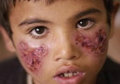 France 24: Afghanistan’s health authorities Friday appealed for international help in dealing with a parasitic disease that is believed to threaten millions in the impoverished country. Leishmaniasis, transmitted by a species of sandfly, threatened the health of 13 million Afghans, the World Health Organisation (WHO) said in a report on neglected tropical diseases. Full news...
-
September 14, 2010 :: RSS :: Print :: Email
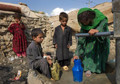 The Guardian: Sala Khan Khel, 40 miles outside Kabul, looks like a rural paradise at harvest time. Women and children play behind the high mud walls of the old houses, the men thresh the wheat, teenagers pick walnuts and the water coming straight off the snowy mountains high above the village gurgles through the irrigation canals. But the rural idyll hides conflict, deep poverty and growing environmental degradation. Full news...
-
September 9, 2010 :: RSS :: Print :: Email
 The Financial Times: In the ornate Shahista restaurant in Dubai, Afghans in traditional robes break the Ramadan fast with fare from their homeland, including “zaban” – or sheep’s tongue. Yet the fleet of tinted and customised Mercedes parked outside the restaurant shows that the diners are not Afghan labourers who toil on the United Arab Emirates’ construction sites but scions of their country’s elite. Full news...
< Previous 1 2 3 ... 6 7 8 ... 15 16 17 Next >