





-
March 9, 2009 :: RSS :: Print :: Email
 IRIN: Less than 30 percent of the 166,000 tonnes of wheat the Afghan government promised to distribute to tens of thousands of people during the winter months (October-March) has been delivered so far, according to the Afghanistan National Disasters Management Authority (ANDMA). Severe drought which reduced domestic agricultural production by 35 percent in 2008, sudden hikes in food prices, and problems resulting from armed conflict have pushed about eight million people into high risk food insecurity, aid organisations say. Full news...
-
March 8, 2009 :: RSS :: Print :: Email
 The Christian Post: Drought-stricken and internally displaced, many Afghans can’t even be assured of one good meal a day for themselves and their family, reported a Church World Service staff on Friday. "Life continues to be difficult for all Afghans, but the tens of thousands of displaced Afghans and returnees from Pakistan and Iran are particularly at risk," says CWS Asia and Pacific Region Coordinator Marvin Parvez, who has also directed the CWS Pakistan/Afghanistan program. Full news...
-
March 5, 2009 :: RSS :: Print :: Email
 IRIN: A 25-year-old man we will call Shakir has told IRIN he rues rejecting an offer of “work” from a Taliban agent whereby he would get 500 Afghanis (about US$10) a day for carrying out attacks on government offices in Farah Province, southwestern Afghanistan. Those who accepted the offer are better off, he thinks. Shakir was deported from Iran three times in 2006-2008 and his efforts to find a job in his home district of Pushtroad have been unsuccessful. Full news...
-
February 28, 2009 :: RSS :: Print :: Email
 Quqnoos: Residents of Kandahar province say that lack of job opportunities is the main reason that some youths in the province join the Taliban. Although unemployment has turned into a big problem all over the country, youths in Kandahar province believe that the government can overcome the problem by creating job opportunities for the people. Full news...
-
February 26, 2009 :: RSS :: Print :: Email
 IRIN: A provincial official said about 400 families (around 2,000 individuals) had been displaced across the province over the past two months. Most of the displaced have set up tents or sought shelter in dilapidated houses in the outskirts of the provincial capital. Due to below zero temperatures and lack of access to safe drinking water, many internally displaced persons (IDPs), particularly children, are prone to diseases such as diarrhoea and pneumonia. Full news...
-
February 24, 2009 :: RSS :: Print :: Email
 BBC News: With little of the infrastructure long promised by the Afghan government of President Hamid Karzai, this village, like many others throughout Afghanistan, is on the verge of collapse. Seven years after the fall of Taliban, this mountainous valley of 300 families still does not have access to clean drinking water and lacks even the crudest of medical clinics. Villagers in Darbaw complain they hardly see any of the substantial profits made from the pistachio forest, let alone Takhar province's relatively lucrative salt and coal mine. Full news...
-
February 21, 2009 :: RSS :: Print :: Email
 PAN: Residents of northeastern Badakhshan province said that two pregnant women and five children were died due to lack of facilities in the provincial hospitals. Abdul Azim, a resident of Raghistan district said that he transferred his wife to Yawan district hospital in three days, but there was also no gynecologist. Full news...
-
February 18, 2009 :: RSS :: Print :: Email
 Amnesty International: Tens of thousands of Afghans displaced from their homes by escalating fighting and ongoing food shortages require immediate humanitarian assistance. Around 235,000 people are currently displaced in Afghanistan, according to estimates by the United Nations High Commissioner for Refugees (UNHCR). Most are displaced as a result of the fighting between government forces (and allied US and NATO troops) and armed opposition groups including the Taliban, particularly in the South, Southeast and Northwest regions of the country. Full news...
-
February 4, 2009 :: RSS :: Print :: Email
 IRIN: In Afghanistan, particularly in poor rural communities, child slavery and debt bondage practices are growing, but are often disguised as marriage, labour or family affairs not requiring state intervention. Haleem, aged nine, is a full-time servant for US$60 a month at Abdul Malik Khan's house in Zherok District, Paktika Province, southeastern Afghanistan. His tasks range from cleaning, washing, serving tea and baby-sitting to night patrols and gate-keeping. Full news...
-
January 14, 2009 :: RSS :: Print :: Email
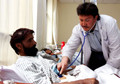 Tolo T.V. (Translated by RAWA): The relatives of patients admitted in the Jamhooriat Hospital complain about the lack of hygienic equipments, necessary medicines and carelessness of the people in charge in the Ministry of Public Health. They say they even have to buy the important equipments of surgery from the bazaar. The head of the surgery department of the Jamhooriat Hospital confirmed the statements and said they have many problems and no steps have been taken by the Ministry of Public Health to solve the matters. A hospital worker said, “We buy all items, from the thread with which we sew the cuts to the substance with which the cut is washed.” Full news...
-
January 5, 2009 :: RSS :: Print :: Email
 IRIN: Azizullah's family left their home in the Sangin District of Helmand Province, southern Afghanistan, because of the worsening conflict, drought and food security situation. Their new home is a one-room mud-hut in the western outskirts of Kabul where over 4,500 internally displaced persons (IDPs) have established a makeshift camp. "We abandoned our home because of aerial strikes [by international forces] and brutalities by the Taliban," Azizullah told IRIN as his six bare-foot children huddled around him on a cold afternoon on 28 December. Full news...
-
December 24, 2008 :: RSS :: Print :: Email
 Quqnoos: Afghanistan’s Independent Human Rights Commission (AIHRC) has expressed concerns over the increasing poverty in the country. According to the latest report by the commission, about ten million people in Afghanistan which make 37% of the population, suffer from severe poverty. Also a large number of people in Afghanistan earn less than Afg.50 in a day. Full news...
-
December 23, 2008 :: RSS :: Print :: Email
 The Telegraph: The trade in children is spurred by the battered country's economy and the failure of foreign aid to reach beyond the coffers of central government in the capital Kabul. A cameraman working for Channel 4 News, Mehran Bozorgnia, witnessed the sale of an eight-year-old boy, Qassem, to Sadiqa, a wealthy woman from Kabul, outside the northern city of Mazar-e-Sharif. Full news...
-
December 16, 2008 :: RSS :: Print :: Email
 National Post: Foreign aid organizations say food shortages and early snows may leave eight million Afghans -- 30% of the population -- on the brink of starvation this winter. Famine could easily overtake violence as the country's top problem. "The current situation is extremely fragile," said Susannah Nicol, a spokeswoman for the World Food Program(WFP) in Kabul. Full news...
-
December 14, 2008 :: RSS :: Print :: Email
 San Francisco Chronicle: Today, many Afghan couples are torn between adhering to the tradition of large families and the financial reality of caring for many children. Afghanistan has the highest fertility rate in Asia at more than seven children per woman. About 800,000 people annually are added to the nation's population of 32 million, according to the United Nations Development Fund. The dilemma is particularly significant in rural areas where parents depend on children to tend crops and livestock, but where war and drought have pushed many Afghans into poverty. Full news...
-
December 2, 2008 :: RSS :: Print :: Email
 IRIN: Drought, poverty and lack of food have adversely affected the life of many children in Chemtal and elsewhere, forcing some to work instead of going to school. Eight-year-old Ahmad Shafi and his younger brother spend many hours a day fetching drinking water for their family in the drought-stricken Chemtal District of Balkh Province, northern Afghanistan. They have been unable to attend school as a result. "We start around eight in the morning and finish by midday," Ahmad told IRIN, adding that their job was "difficult" and "long". Full news...
-
November 30, 2008 :: RSS :: Print :: Email
 Herald Tribune: Breaking with a military tradition of keeping silent about policy, a top German general has branded his country's efforts in Afghanistan a failure, singling out its poor record in training the Afghan police and allocating development aid. The comments came from General Hans-Christoph Ammon, head of the army's elite special commando unit, or KSK, whose officers are in Afghanistan fighting alongside U.S. forces against Al Qaeda and the Taliban. Full news...
-
November 27, 2008 :: RSS :: Print :: Email
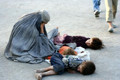 IRIN: More than 1.6 million under-five children and hundreds of thousands of vulnerable women are exposed to acute malnutrition and some could die this winter due to food insecurity and lack of medical care, the government has warned. hese figures are significantly higher than the 550,000 under-five children and pregnant and lactating women considered "most vulnerable" in a joint emergency appeal by the government and aid agencies in July. Full news...
-
November 20, 2008 :: RSS :: Print :: Email
 BBC: Although millions of Afghan children have gone back to school since the fall of the Taliban, full time education remains a distant dream for many. Continuing poverty means many children, including some as young as six, are forced to work to help their families. Twelve-year-old Izatullah was pushing a cart containing heavy sacks of flour. "I take this load to another shopkeeper. They will give me 10 or 20 Afghanis (21 pence or 42pence). I am poor, I don't have bread. My father is an old man. I earn our living," he said. Full news...
-
November 20, 2008 :: RSS :: Print :: Email
 Quqnoos: Child abuse has tripled in Afghanistan’s northern provinces, the head of the human rights commission in the north, Said Muhammad Sami, said. He said the sexual abuse of, and violence against, children had increased threefold in four of the north’s provinces. Full news...
-
November 20, 2008 :: RSS :: Print :: Email
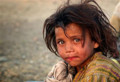 PAN (Translated by RAWA): In the common border of Torkham between Pakistan and Afghanistan about 4000 children engage in harsh work everyday. Besides being beaten by the border patrols of Pakistan they are also imprisoned. Rana, a 12-year old girl belonging to the Sarkhrud District of Ningarhar province, told PAN on 20 November that her father has Hepatitis and she is forced to work in Torkham. She added that everyday she has to bring a small bag of flour from the other side of the border to earn 10 rupees. Full news...
-
November 18, 2008 :: RSS :: Print :: Email
 AP: Khan and his children are among nearly 4,000 Afghan families living in a makeshift settlement because their homes were destroyed or overtaken in the decades they spent abroad waiting out wars. First, with the former Soviet Union in the 80s, then the strife of civil war and most recently the U.S. offensive against the Taliban. At the height of their exodus, Afghans made up the world's largest refugee population with 8 million people in more than 70 countries. More than 5 million of these people have returned home since 2002, according to the U.N. Full news...
-
November 14, 2008 :: RSS :: Print :: Email
 CNN: Little Banafsha wakes up in her small mud home, has a cup of tea and braces herself for the day ahead. She is just 11 years old, but she is the breadwinner for her family. Literally. Without the bread that she begs from strangers, she, her sisters, her baby brothers and her mom would all go hungry. Full news...
-
November 9, 2008 :: RSS :: Print :: Email
 Quqnoos: Jobless refugees turfed out of Iran turn to lives of crime, officials say. Rising unemployment has forced many people living in the south-western province of Nimroz to turn to crime, militancy or drugs for money, officials say. About 30,000 illegal Afghan immigrants have been ordered out of Iran since the start of October for not having work permits. The returnees say they are willing to work in Nirmoz for $2 a day, but they complain that there are no jobs available for them. Full news...
-
November 2, 2008 :: RSS :: Print :: Email
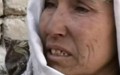 Daily Times: The Taliban — blamed nowadays for just about all of Afghanistan’s ills — have officially been gone for nearly seven years, so why are conditions still so abysmal? While billions of dollars in aid have led to improvements in urban areas, where health facilities have been built and midwives trained, the overall maternal death figures have hardly changed. As one doctor told me: “A competent midwife or nurse would rather be out of work in Kabul than stuck in a remote village.” But most Afghans live in remote villages — those in Badakhshan can be reached only after a day’s bumpy ride on a donkey. Full news...
-
November 2, 2008 :: RSS :: Print :: Email
 Canada Free Press: If you want to know what life was like in the seventh century, Afghanistan is the place to go. It is largely devoid of anything passing for modernity, by which we mean medical facilities, schools, roads, and such. Never mind the telephones and other detritus of modern life, the conversations have not changed in centuries. The only reliable element of Afghanistan’s economy is poppy cultivation for the opium trade which the CIA estimates generates “roughly $4 billion in illicit economic activity.” This is another way of saying that none of this money reaches what passes for a central government except in the form of bribes. It is a major source of funding for the Taliban. Full news...
-
October 31, 2008 :: RSS :: Print :: Email
 PAN: More than 80% Afghans are faced by mental health problems due to long war and economic depravity, where as child stress has increased by 30%, compared to the past, said Dr. Khalid Mufti, a well known Psychiatrist here on Friday. Full news...
-
October 31, 2008 :: RSS :: Print :: Email
AsiaNews: A team of experts from the Royal United Services Institute (RUSI), a leading British defence think-tank, said that famine is a greater threat to Afghanistan than the Taliban. At least 8.4 million Afghans are facing food shortages as a result of poor harvest, drought and inadequate irrigation. World Food Programme calls for at least 95,000 tonnes in food aid by February. Full news...
-
October 28, 2008 :: RSS :: Print :: Email
 PAN (Translated by RAWA): The beggars of Hazrat Ali (ra)’s shrine in Balkh who earn a little money with a lot of difficulties, have to pay 30 to 40 Afghanis daily to the police of the shrine. The police officers who are not satisfied from the monthly wages they get from the government, say that 5000 Afghanis in a month is too less to fulfill their needs and so they are forced to take bribe from beggars. On average, everyday almost 250 beggars enter the Mazar-e-Sharif Shrine and each earns a little more or less than a 100 Afghanis everyday. The police officers take 30 Afghanis on average from each beggar and this makes 220,000 Afghanis ($4500) per month. Full news...
-
October 28, 2008 :: RSS :: Print :: Email
 AFP: Afghans are increasingly pessimistic about their country, with security, unemployment and high prices dominating concerns, according to an annual mood survey released Tuesday. Thirty-eight percent of respondents this year said Afghanistan was moving in the right direction, compared with 42 percent in 2007 and 44 percent in 2006. Full news...
< Previous 1 2 3 ... 9.5666666666667 10.566666666667 11.566666666667 ... 15 16 17 Next >