





-
August 9, 2011 :: RSS :: Print :: Email
 IRIN: Ongoing drought in northern, northeastern and western Afghanistan is likely to push 1.5-2 million more people into food insecurity this autumn, according to the UN World Food Programme (WFP). This is in addition to the seven million country-wide already facing food shortages. Full news...
-
August 8, 2011 :: RSS :: Print :: Email
 The New York Times: This tiny village rose from the rocky soil with great hopes and 10 million USD in foreign aid, a Levittown of identical mud-walled houses built to shelter some of the hundreds of thousands of Afghans set adrift by war and flight. Five years later, the village of Alice-Ghan and those good intentions are tilting toward ruin. Full news...
-
August 6, 2011 :: RSS :: Print :: Email
 Reuters: The global community has failed to create a politically stable and economically viable Afghanistan despite pouring billions of dollars into the South Asian nation during a decade-long war against the Taliban, says the International Crisis Group. The Brussels-based think tank said the United States and its allies still lacked a coherent policy to strengthen Afghanistan... Full news...
-
July 30, 2011 :: RSS :: Print :: Email
 The Sydney Morning Herald: LOOMING over the dusty, noisy metalworkers’ lane in Kabul is a gleaming skyscraper. Daily, the building’s shadow sweeps over the wooden workshops. And then it is gone. It is a fitting metaphor for this city’s two-speed economy. “We work 100 metres from these buildings,” metalworker Kazem says, “and less than a kilometre from the presidential palace - but we have no electricity.” Full news...
-
June 21, 2011 :: RSS :: Print :: Email
 CNN: Far away from the war, in the remote hills of Badakhshan, there is another battle raging. Trundling into the valleys on dusty roads ripped up by large SUVs, an Afghan task force is heading towards their target: an industry so profitable that many fear it's Afghanistan’s only viable option once the West pulls its troops and money out. Full news...
-
June 20, 2011 :: RSS :: Print :: Email
 GlobalPost: The man sits cross-legged on the floor of his mud house, one of several in a walled compound on the barren outskirts of Kabul, welcoming his visitors with tea, cookies and a wan smile. There’s nothing out here but a few other mud-brick structures, hidden behind walls ― no stores, no schools, no toys for the wide-eyed children. Behind them dusty emptiness stretches as far as the eye can see. Full news...
-
June 15, 2011 :: RSS :: Print :: Email
 The Sydney Morning Herald: Targeted violence against female public officials, dismal healthcare and desperate poverty make Afghanistan the world’s most dangerous country in which to be born a woman, a new global survey shows. The Democratic Republic of Congo, Pakistan, India and Somalia feature in descending order after Afghanistan in the list of the five worst countries, the poll among gender experts shows. Full news...
-
June 6, 2011 :: RSS :: Print :: Email
 IWPR: As the Afghan government prides itself on boosting budget revenues, it has been accused of using methods that hurt people on modest incomes while letting large businesses off some or all their taxes. In an interview for IWPR, finance ministry spokesman Aziz Shams said domestic revenues reached 1.8 billion US dollars in the last fiscal year, which runs from March to March. Full news...
-
June 1, 2011 :: RSS :: Print :: Email
 Wakht News Agency: United Nation High Commission for Refugees UNHCR had expressed concern over the internally displaced people in Afghanistan according to the reports provided by this office and the World Bank in Kabul, Herat and Kandahar provinces. Research said unemployment, lack of shelter and poverty were the main challenges faced by the internally displaced individuals... Full news...
-
May 15, 2011 :: RSS :: Print :: Email
 Xinhua: “I have no choice but to sell shopping bags to support our family. My elder brother also works on street because our father is disabled,” an Afghan child who introduced himself as Shah Jan told Xinhua on Sunday. Dressed in grubby clothes and shouting up “shopping bags, shopping bags” in a crowded downtown bazaar in the Afghan capital Kabul to attract buyers, the poor Shah Jan, 7... Full news...
-
May 13, 2011 :: RSS :: Print :: Email
 San Diego Union Tribune: What do human rights, women’s rights, civil rights, justice, freedom of religion and freedom of speech have in common? They are all nonexistent in Afghanistan. In my six months here, I’ve witnessed the aftermath of the Taliban rule, which forced Islam on people, murdered women for going to school or not wearing a burqa, and stoned people for speaking their mind. Full news...
-
April 17, 2011 :: RSS :: Print :: Email
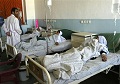 Reuters: Afghanistan’s government and foreign donors spend barely 10 USD a person on health, despite pointing to it as key to winning back support against a worsening insurgency that has dragged on for nearly a decade, a study said Sunday. The other 31 USD per person that makes up the country’s meager health spend comes from Afghans themselves, many of whom struggle to provide doctors and drug care for their families... Full news...
-
April 15, 2011 :: RSS :: Print :: Email
 Reuters: The United Nations warned on Friday of a looming food aid shortage in Afghanistan that could leave more than 7 million people hungry unless it received urgent cash donations of over 250 million USD to buy more supplies. Most of those who will go short of food are women and children, but overall those at risk make up nearly a quarter of the country's population of around 30 million... Full news...
-
April 8, 2011 :: RSS :: Print :: Email
 IWPR: After several years of attempting to earn a living by growing crops other than poppies, frustrated farmers in Kapisa province are once again producing the raw material for heroin. They say soaring drug prices, along with the government’s failure to fulfill the promises it made as part of its eradication program, left them no choice. Full news...
-
April 7, 2011 :: RSS :: Print :: Email
 PAN: The number of women toiling away alongside their husbands in the fields, construction and other hard labour is increasing in central Bamyan province, with many having to give up school to contribute to the family’s finances. Zahra, 36, lives in Surkh, and says she has worked as a farmhand for the past eight years. Full news...
-
February 7, 2011 :: RSS :: Print :: Email
 The Huffington Post: As the U.S. military involvement in Afghanistan enters its 10th year, it is notable that most Afghan children have never known peace. Unlike confrontations fought on distant battlefields, the inherent peril of war has found intimacy within their homes and villages. When the threat of dying is real and ever-present, it shapes your view of the world. Full news...
-
January 23, 2011 :: RSS :: Print :: Email
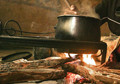 The Independent: The world’s deadliest pollution does not come from factories billowing smoke, industries tainting water supplies or chemicals seeping into farm land. It comes from within people’s own homes. Smoke from domestic fires kills nearly two million people each year and sickens millions more, according to the World Health Organisation (WHO). Full news...
-
January 21, 2011 :: RSS :: Print :: Email
 IWPR: Shahbaz stands at the Kotai Sangi junction in Kabul with a set of builder’s tools, just as he does every day, hoping someone will take him on. “I have nine family members and I need to earn some money to feed my children,” he told the Institute for War and Peace Reporting (IWPR). “But there isn’t any work. I come in the morning and leave in the evening just like that.” Full news...
-
January 19, 2011 :: RSS :: Print :: Email
 UPI: International partners teamed up with Afghan leaders to discuss the seriousness of food security issues in the country, the World Food Program said. Louis Imbleau, the WFP representative in Afghanistan, met with Afghan leaders in Kabul to discuss bilateral measures needed to address food shortages in the war-torn country. Full news...
-
January 16, 2011 :: RSS :: Print :: Email
 Xinhua: No education, lack of food and winter clothes. In Afghanistan’s capital Kabul, hundreds of war displaced children and their families are crying for relief assistance from the government. Currently, there are 804 families living in the slum, in west of the city, with the largest family of 15 children. “We do not have enough food and clothes. We need help,” said Wakiltawos Khan, head of the slum. Full news...
-
January 13, 2011 :: RSS :: Print :: Email
 RFE/RL: Early each morning, the schoolchildren of the Aqibi Silo neighborhood emerge from their homes on a hillside near the center of Kabul.But they don’t go to class. Instead, they go off to fetch water -- over and over again -- until long after the school day is done. They begin by tumbling down the narrow footpaths carrying brightly colored plastic canisters as light as balloons. Full news...
-
January 13, 2011 :: RSS :: Print :: Email
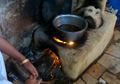 Reuters: As temperatures drop well below freezing during the country’s harsh winter, bombs and bullets from a near-decade long war against a Taliban-led insurgency are not the only threat -- just trying to light a home and stay warm can be deadly. “We were using gas for a lamp and cooking food on the bukhari (stove) and the gas bottle was too close and got too hot,” Mohammad said... Full news...
-
January 11, 2011 :: RSS :: Print :: Email
 IFRC: Harsh winters are always a major cause for concern in Afghanistan. The country's geography and its unstable security situation pose a huge challenge to international organizations trying to assist vulnerable communities in remote villages. When the temperature drops, it becomes difficult for people in remote areas to find food, with farmers unable to provide a solution in the harsh climatic conditions. Full news...
-
January 4, 2011 :: RSS :: Print :: Email
 CNN: Five-year-old Marjan sniffles from the cold as she struggles under her load. Hoisted on her back is a bag almost as big as she is. Instead of going to school, Marjan scavenges for hours with her 10-year-old aunt collecting trash. It is a heavy burden for such a small child but a necessary one. Full news...
-
January 1, 2011 :: RSS :: Print :: Email
 Reuters: Worsening security and enduring conservative Islamic customs prevented almost five million Afghan children from going to school in 2010, a government official said on Saturday. The strict Islamist Taliban were ousted from power by U.S.-backed Afghan forces nearly a decade ago, but many women are still not able to work outside the home and girls are prevented from attending school in remote parts of the country. Full news...
-
January 1, 2011 :: RSS :: Print :: Email
 UNAMA: Abdul Karim (not his real name) is a nine-year-old Afghan child. He waits under the street traffic light in downtown Herat for the cars to come and cleans their windscreens in the hope of gleaning some money. Abdul is the only breadwinner for his three-member family. He lost his drug-addicted father two years ago, and now supports his family by doing this hard work every day, sometimes begging. Full news...
-
December 30, 2010 :: RSS :: Print :: Email
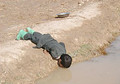 Medair: High in Afghanistan’s mountains, Yusif Habib, a father of five, lives in the remote village of Zermod-Payan. For generations, this tiny village's main source of drinking water has been a rushing mountain river. “Every day, I make seven trips to the river with two 20-litre jerry cans,” said Yusif. “And it is a long walk from the river, up the steep hill. It is very difficult in winter.” Full news...
-
December 25, 2010 :: RSS :: Print :: Email
 VOA: Growing insecurity and unemployment in Afghanistan is forcing Afghans into the capital, across borders and into the insurgency looking for work. Every day hundreds of men gather at Kote Sangi; one of the busiest intersections in Kabul. They fill the intersection waiting for work; they pass time talking and joking over cups of tea. Full news...
-
December 19, 2010 :: RSS :: Print :: Email
 Reuters: Afghan Abdul Wahab swings a heavy sledgehammer down onto a red hot piece of metal to mold it into a truck part, sweat dripping down a face marked with grime and soot from the fire, and with a focus rare for an 11-year-old. Wahab is one of about 1.2 million Afghan children in part or full time work, the government says... Full news...
-
December 15, 2010 :: RSS :: Print :: Email
 Los Angeles Times: A Pentagon report due out this week will probably try to convince us that the war in Afghanistan is on the right track. And yet a poll released this month surveying Afghan public opinion says otherwise. Although the poll results showed some bright spots, after spending hundreds of billions of taxpayer dollars, security and day-to-day life in many regions of Afghanistan aren't improving. Full news...
< Previous 1 2 3 ... 5.5666666666667 6.5666666666667 7.5666666666667 ... 15 16 17 Next >