





-
October 6, 2009 :: RSS :: Print :: Email
 UNDP: This year's HDI, which refers to 2007, highlights the very large gaps in well-being and life chances that continue to divide our increasingly interconnected world. The HDI for Afghanistan is 0.352, which gives the country a rank of 181 out of 182 countries. By looking at some of the most fundamental aspects of people’s lives and opportunities the HDI provides a much more complete picture of a country's development than other indicators, such as GDP per capita. Full news...
-
October 5, 2009 :: RSS :: Print :: Email
 IRIN: Despite billions of dollars of aid over the past eight years Afghanistan has slipped down the latest UN human development index which ranks it 181 out of 182 countries, with only Niger lower. The UN Development Programme has been ranking countries on the basis of access to health and education, life expectancy and living standards since 1990, but the only other time the country was ranked globally was in 2007 when it was listed as fifth from bottom. Full news...
-
September 27, 2009 :: RSS :: Print :: Email
 PAN: The man identified as Ahmadullah shot his wife, his children, wife and children of his brother before turning the gun on himself at the family's home in Ghuli village of the district, said district chief Yousuf Siraji. Siraji said the reason behind the suicide and murders is said be a family dispute that emerged in the family last week. Full news...
-
September 21, 2009 :: RSS :: Print :: Email
 FT.com: Nato forces are losing ground against the insurgency in Afghanistan. Afghans look as though they will continue to be led by a corrupt and warlord-influenced government, of doubtful legitimacy after the flawed and still inconclusive recent elections. As casualties mount and spread, a backlash is building in allied countries against a war their citizens increasingly see as both pointless and doomed. Full news...
-
September 17, 2009 :: RSS :: Print :: Email
 BBC Persian (Translated by RAWA): Poverty in the month of Ramadan shows itself with much harsher face in the dinning cloth of most of the families in Kabul city.... The monthly income of Marzia is 1,500 Afghanis equivalent to 30 dollars which she takes from the government as her husband's pension. Once her husband has been a worker of municipality but now extremely needs to be cured and this money is even not enough for the cost of his sickness. This man already was paralyzed and now he is also suffering from mental problem and is always needs someone to take care of him. Full news...
-
September 15, 2009 :: RSS :: Print :: Email
 CNN: Afghanistan's reputation as the world's leading narcotics supplier is well-known, but in a squalid ruin in Kabul, the country hides a darker secret -- a huge home grown drug addiction problem now on the brink of fueling an HIV/AIDS epidemic. Here junkies lie in their own filth, wasted limbs poking out of blood-spattered clothing as they blank out the abject misery of their surroundings. In one room, a veritable narcotics bazaar offers pills and drug paraphernalia -- with hits retailing at less than $4. Full news...
-
September 14, 2009 :: RSS :: Print :: Email
 IRIN: Twenty-eight deaths from cholera and/or acute watery diarrhoea (AWD) have been reported in Afghanistan in the past two months, the Ministry of Public Health (MoPH) has said. At least 673 cases of AWD and/or cholera had been reported in 11 of the country’s 34 provinces, it said. According to the World Health Organization, cholera, which is rarely reported in Afghanistan, is an acute diarrhoeal infection caused by ingestion of the bacterium vibrio cholerae. Full news...
-
September 10, 2009 :: RSS :: Print :: Email
 IRIN: Afghanistan’s anti-begging commission has arrested hundreds of beggars in Kabul in the past few months, but most are released if relatives guarantee they will not beg again, officials said. The government outlawed street-begging in November 2008 and set up a commission - made up of different government bodies and the Afghan Red Crescent Society (ARCS) - to end street-begging in the capital. Full news...
-
August 6, 2009 :: RSS :: Print :: Email
 Toronto Star: In dozens of mountain hamlets in this remote corner of Afghanistan, opium addiction has become so entrenched that whole families – from toddlers to old men – are addicts. Cut off from the rest of the world by glacial streams, the addiction moves from house to house, infecting entire communities. From just one family years ago, at least half the people of Sarab, population 1,850, are now addicts. Full news...
-
July 22, 2009 :: RSS :: Print :: Email
 IRIN: More than 200,000 Afghans have been expelled from Iran in the past six months, marking a 25 percent increase on the same period in 2008, according to officials. Most of the deportees are single males who had gone to Iran for employment opportunities. Hosting some 900,000 registered Afghan refugees, Iran has deported about one million Afghans considered "illegal migrants" over the past three years, according to aid agencies and government officials. Full news...
-
July 15, 2009 :: RSS :: Print :: Email
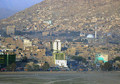 IRIN: Most people in the Afghan capital Kabul live in illegal, unplanned and sub-standard houses that are prone to natural disasters and lack water and sanitation facilities, according to government officials. "Of the [estimated] five million people currently living in Kabul, at least three million are residing in illegal and unplanned houses," Abdul Wahab Sadaat, deputy director of city services at the Kabul Municipality, told IRIN. Full news...
-
July 1, 2009 :: RSS :: Print :: Email
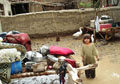 IRIN: Thousands of people who lost their houses in January-May flooding in different parts of Afghanistan need help to repair or rebuild their homes, or find new ones, before winter. “Where houses are damaged or completely destroyed, people are in urgent need of shelter,” Asif Khairkhwa, chairman of the Afghan Red Crescent Society (ARCS) in the northern province of Balkh, told IRIN. “People should have a shelter before the winter.” Full news...
-
June 24, 2009 :: RSS :: Print :: Email
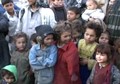 IRIN: Family planning services are available in over 90 percent of health facilities across Afghanistan but the number of women using them in rural areas is too low, according to the Ministry of Public Health (MoPH). Hamida Ebadi, director of MoPH’s reproductive health unit, reckoned only 14-15 percent of women in rural and remote regions use family planning services. Most pregnancy-related deaths happen in remote, isolated and insecure areas of the country where people have poor access to quality health services, officials say. Full news...
-
June 24, 2009 :: RSS :: Print :: Email
 UNICEF: Child labour is an issue of growing concern in Afghanistan. The ongoing political tensions, insecurity and rising food prices have put the livelihoods of vulnerable families and children increasingly at risk. In Afghanistan, as in many other countries, the child labour problem is rooted in poverty and in socioeconomic inequalities based on gender and disability. Already, 30 percent of Afghan children aged 5 to 14 are engaged in some form of work. Full news...
-
June 23, 2009 :: RSS :: Print :: Email
 Channel 4 News: Nima Elbagir travels to Afghanistan's border with Pakistan, where a programme to eradicate opium production has led to an upsurge of child smugglers. In Tsasubi, village elders told us that forced to abandon poppy farming, and receiving no help in creating alternative livelihoods, they had turned to smuggling. Full news...
-
June 23, 2009 :: RSS :: Print :: Email
 PAN (Translated by RAWA): An 18-year-old Afghan boy named Nabiullah set himself on fire on his father’s grave and died in hospital in the in Takhar province, in Northern Afghanistan. ... according to information Nabiullah was the youngest one in his family and had lost his father in recent years but his elder brothers stopped him from going to school and forced him to do a job... it is possible that the economic and family problems were causes of the boy’s self-immolation. Full news...
-
June 22, 2009 :: RSS :: Print :: Email
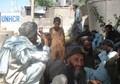 IRIN: Over 1,000 families in a camp for internally displaced persons (IDPs) in Kandahar Province, southern Afghanistan, have opted to return to their home areas in the north and northwest of the country because of worsening insecurity and lack of aid at the camp. Mohammad Azam Nawabi, director of the refugees’ department in Kandahar, told IRIN 1,087 families had formally expressed their desire to return. Full news...
-
June 17, 2009 :: RSS :: Print :: Email
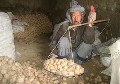 IRIN: Farmers in Afghanistan’s top potato-producing province are complaining about declining profits, mainly because of cold weather, lack of storage facilities and bad roads. Potato cultivation in Bamyan Province, central Afghanistan, employs thousands of people and output can top 150,000 tons a year, according to the Ministry of Agriculture, Irrigation and Livestock. Full news...
-
June 17, 2009 :: RSS :: Print :: Email
 The National: Juma Gul’s muffled crying became noticeable only when she wiped the tears away using her burqa or slumped forward with her head in her hands. Speaking Uzbek, she described how she made the equivalent of about Dh440 by selling her baby daughter off for marriage. The girl’s fianc? had memorised the Quran and his father promised that her virginity would be respected until she was an adult. The couple eventually wed four years ago, when she was eight and he was in his late twenties. Full news...
-
June 10, 2009 :: RSS :: Print :: Email
 RAWA News: Mohammad Hashim Zare, the governor of Jowzjan province in Northern Afghanistan, has been accused of wasting the aid donated to the people of this province by Turkmenistan, central government and other organizations which has been sent to the flood-affected people in that province. Ferouza Quraishi, the deputy of the Provincial Council of Jowzjan called the governor inefficient” and said the aid has not reached those in need. Full news...
-
June 7, 2009 :: RSS :: Print :: Email
 IRIN: Poverty, community pressure and the low quality of education mean 25 percent of children in Afghanistan aged 7-14 are at risk of leaving school and drifting into exploitative work situations, according to a new report by a Kabul-based think-tank. The cost of education, lack of role models and family pressures were cited as reasons why children often ended up being exploited in backstreet workshops, factories or as domestic servants. Full news...
-
June 5, 2009 :: RSS :: Print :: Email
 IRIN News: Facing unemployment, insecurity and lack of socio-economic opportunities at home, many Afghans, mostly young males, have increasingly resorted to costly and perilous illegal migration to European and other industrialized countries. Over 18,000 Afghan asylum-seekers were registered in 44 industrialized states in 2008 - a significant increase on previous years, according to the UN Refugee Agency (UNHCR). Full news...
-
May 28, 2009 :: RSS :: Print :: Email
 The Canadian Press: An international aid expert says only pennies from each dollar being sent to Afghanistan are actually reaching the people who need help. Marco Vicenzino says he is appalled by the inefficiency of humanitarian aid efforts. Vicenzino, who is a strategic adviser for the Afghanistan World Foundation, says about 80 cents of every dollar goes back to donor countries - largely through the contractors doing the work. Full news...
-
May 25, 2009 :: RSS :: Print :: Email
 The Trentonian: If so, maybe it’s time to look at the other Afghan surge: its population growth. It’s been seven years now since George W. Bush committed American troops to Afghanistan. Since then, Afghanistan’s population has jumped by 22 percent. Under current projections, its population will be twice as large in 2026 as it was in 2001. That’s because the average Afghan woman has almost seven children, one of the highest fertility rates in the world. Full news...
-
May 23, 2009 :: RSS :: Print :: Email
 The Times: Millions of pounds in taxpayers’ money have been wasted on failed reconstruction projects in Afghanistan, according to an internal assessment by the Department for International Development. An evaluation by independent consultants criticised the department’s approach to planning, risk management and staffing, and said poor co-ordination with the rest of Whitehall meant that the department was slow to shift strategy as the military effort moved to counter-insurgency. Full news...
-
April 30, 2009 :: RSS :: Print :: Email
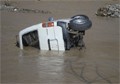 IRIN: Flash floods, landslides and earthquakes in different parts of Afghanistan in the last 10 days or so have damaged thousands of houses, killed hundreds of livestock and made thousands homeless, the UN Office for the Coordination of Humanitarian Affairs (OCHA) has said. “In Balkh Province [northern Afghanistan] about 1,500 families need emergency assistance,” said Sheilagh Henry, an OCHA field coordinator. Full news...
-
April 24, 2009 :: RSS :: Print :: Email
 Reuters: Mohammed Ali has no idea that the Taliban who once drove him from his home are staging a comeback in parts of Afghanistan. As a hired farmer, he is too busy worrying how to feed a family of seven on $100 a year. At the moment his children live off just bread and tea, but that is better than the harsh winter months when there is sometimes nothing. Many Afghans face a more urgent daily battle against poverty and hunger. Full news...
-
April 23, 2009 :: RSS :: Print :: Email
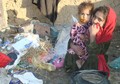 IRIN: Open defecation, lack of toilets and poor sanitation in makeshift internally displaced persons (IDP) camps throughout Afghanistan are a health threat, particularly to children, health workers and aid agencies say. According to the Afghan government, at least 230,000 people are living in formal IDP camps and informal settlements where few sanitary, water and toilet facilities are available. About 500 families (2,500 individuals) displaced from southern regions have set up shacks, tents and mud huts in Qambar on the western outskirts of Kabul. Full news...
-
April 19, 2009 :: RSS :: Print :: Email
 The National: Even as the international community renews its pledge to help develop Afghanistan’s infrastructure and public services, health workers throughout the nation’s capital paint a picture of a daily struggle against the odds in conditions that have barely improved since 2001. The lack of funding is so severe that operations are being carried out with old versions of the wrong instruments and patients must often supply themselves with medicines. In some cases, easily preventable deaths have apparently resulted. Full news...
-
April 16, 2009 :: RSS :: Print :: Email
 NPR: A growing number of Afghans — including children — are escaping the pain of war and poverty by using opium or heroin, for as little as a dollar a day. A United Nations survey begun this month is widely expected to show that at least 1 in 12 people in Afghanistan abuses drugs — double the number in the last survey four years ago. Experts say that the alarming trend is not being addressed by the Afghan government and its international partners, even though most officials acknowledge that the drug scourge threatens lasting stability in Afghanistan. Full news...
< Previous 1 2 3 ... 8.3333333333333 9.3333333333333 10.333333333333 ... 15 16 17 Next >